Last Updated: 21th Feb, 2024
In the post-Airbnb world, the range of things you can borrow or lend online has stretched far beyond beautiful rooms to include cars, boats, pets, dresses, and even bikes. In fact, the COVID-19 pandemic further led to a reported increase in consumer demand for bikes and biking gear. This resulted in the emergence of whole new business models; the most prominent being the peer-to-peer bike rental model.
After conducting an in-depth study of the business model of peer-to-peer bike rental marketplaces, FATbit’s team of analysts curated a list of the key bike rental software features required to build a stellar bike rental marketplace. You can read that and other key findings of our analysts below:
Table of Contents
Online Bike Rental Business & Revenue Model
There is a huge demand for bike rentals across the globe and the peer-to-peer business model connects bike owners with consumers demanding a used-bike. Checkout the following figure to know how the P2P bike rental software exactly works.
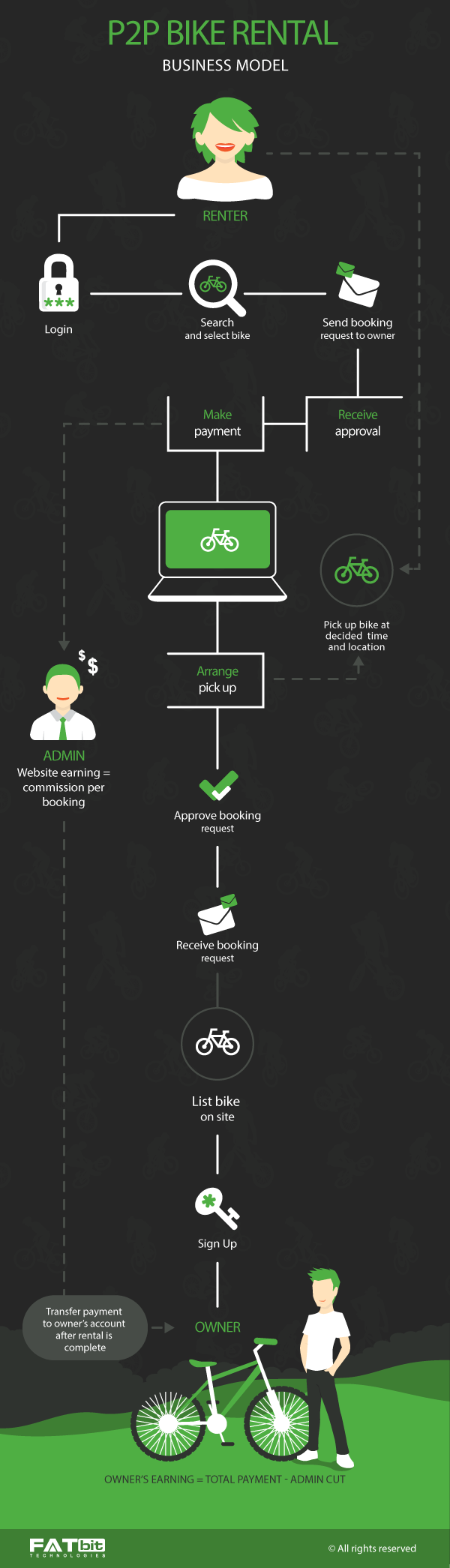
While bike owners make money by renting their equipment, prospective rentees get a bike for their various needs at a very reasonable price. Although listing a bike on P2P marketplaces is usually free, the platform can levy a service charge from rentees while booking the bike.
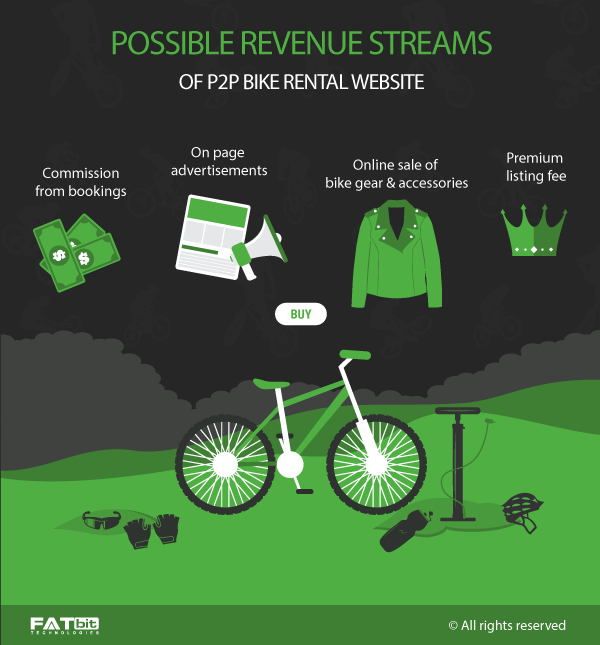
Apart from the above-mentioned revenue streams, the business owner can also charge vendors for uploading listings on a monthly/quarterly/yearly subscription basis.
To help entrepreneurs launch a successful bike rental platform, business analysts at FATbit Technologies spent many hours studying user experience, functionality, and revenue models to develop an advanced bike hire software. First let’s learn how bike hire platforms make money and then go through features which have the potential to make a marketplace popular amongst the targeted audience.
How the Platform Works for Rentees
- Rentees (the end-customers of a bike rental platform) search for bikes in their specified regions
- They view the available listings and make a request to rent a bike
- Before booking, the rentees get the option to message the bike owner to clear any query(s)
- Rentees select a delivery method and pay the rental fee to the admin of the marketplace
- Rentees receive the bike and can use it for the rental duration as per the terms and conditions of the marketplace and bike owner
How the Platform Works for Bike Owners
- Bike owners sign up and create an account
- They upload detailed listings with images
- Rentees searching for bikes send a rental request to the owners
- The owners have the option to approve/reject any requests received.
- Once the bike owner provides the bike to a rentee, the marketplace owner deducts his/her commission from the payment and transfer the rest to the bike owner as a rental fee
Key Players
Many startups want to be the Airbnb of bike renting by capitalizing on the business potential in the bike rental industry. With the right website and mobile technology, there are opportunities for startups to enter the industry and establish a name. Main competitors in this niche marketplace are:
- Spinlister
- Rentabikenow
- ListNRide
- Riders Share
How Yo!Rent Helped eWheelers Scale their Bike Renting and Selling Operations
eWheelers is an eBike marketplace platform that rents and sells eBikes in multiple cities. The website is powered by YoRent bike hire software.
eWheelers has multiple features that ease business operations and make the platform user-friendly. Apart from core features such as agreement management, inventory management, and advanced security management, eWheelers also has features such as product comparison, order management, and many more.
While multiple eCommerce platforms find it difficult to have selling and renting features in a simultaneous manner. Yo!Rent has an in-built module that makes tasks a lot easier for the marketplace owner to set the options. View eWheelers case study to know more.
Key Features of a Bike Rental Software
Most peer to peer renting services flourish on a combo of powerful features and user experience. Your website in that aspect needs to be beautifully designed with all the required information and navigation links. Let’s take a look at various functionalities and UX elements of a bike rental software for a better understanding:
Homepage
- Peer-to-peer bike renting service should focus on bridging the gap between rentee & owner. This is why your homepage should give a clear message of what the website and its service is all about.
- There should also be a search bar placed prominently to help rentees run searches as per their requirements. We will give you an in-depth analysis of the search functionality later in this post.
- As the peer-to-peer renting model is relatively new, many users find it difficult to understand the overall process. This is why you can put a “How it works” button under the search bar on the homepage.
- The top bar should contain links to the “List a bike” section that asks visitors to list their bike for renting. This is a crucial part of the business model and hence on homepage.
Sign-up Page
This is one of the critical areas on the website as you want maximum number of people to sign up on your platform. If your service is great but the signup process is long and tedious, then you may lose out on many prospective users. To ensure that the overall process is smooth, you can incorporate a popup, preferably with the option of social login, for signup, rather than a dedicated page.
- The signup form should only ask for name, email and password. Mobile number can be optional and can also be added at a later stage for verification.
- Users should also be able to use their social networking profiles for sign up.
- There should be one sign-up form for both rentees and owners.
Social Connect
Most of the peer-to-peer platforms give special importance to the social media platforms. As this service is all about renting and meeting new people, you should also focus on social engagement. Right on the homepage, you can show the latest tweets by people who have used your service as a rentee as well as a bike owner. In addition to that, you can also show prominent news websites that have covered your business model.
Whenever you build an online peer to peer bike renting network, always make provision for a social engagement section and features.
Improve User Engagement by Adding Best Social Media
When web users explore a new website and start to gain a basic understanding of how everything works, they also encounter many questions. That’s where the Help section comes in. A help section should cover all the common queries web users are likely to ask and provide links to all the knowledge base sections on:
- Renting
- Listing
- Account
- Profile
- Other commonly asked queries
If the user is somehow unable to get their queries resolved via a knowledge base, then, you can even add the option for them to contact the support services and email their respective questions. We at FATbit believe that this section is vital for a bike rental software.
Search Functionality
As the overall business model of a bike hire platform is based on finding bikes, you have to put a lot of effort on its search capabilities. The search functionality of the website must have the autocomplete feature and should be created with concepts of UX in mind. As discussed earlier, a good bike rental marketplace should definitely have a prominently placed search bar on the homepage.
Expand Inventory Over Time
As your business grows, it’s always nice to consider adding more varieties of items on your website. Besides bikes, you can start offering snowboards and surfboards.
How it Works
A bike rental website helps people connect with trusted bike owners in their nearby regions. As bike renting service might be new to some visitors, you should place a dedicated section which explains the website to bike owners as well as the rentees.
The overall process for renting a bike can include:
- Finding a bike
- Contacting the bike owner
- Booking the bike
In order to boost user confidence, you can also add a testimonial section which shows the latest tweets from rentees.
The listing process can also be managed in the same manner:
- Signing up on the marketplace
- Uploading a bike listing
- Accepting rent requests
There can also be a reviews section, which showcases reviews from bike owners. This is highly beneficial in building trust among new users.
List a Bike
You need to keep the overall process of listing a bike easy and simple. The forms should just ask for some basic details about the bike, which are vital from the rentee’s prospective:
- Bike type
- Photos of bike
- Bike description
- Price on hourly/daily/weekly basis
- Meeting location
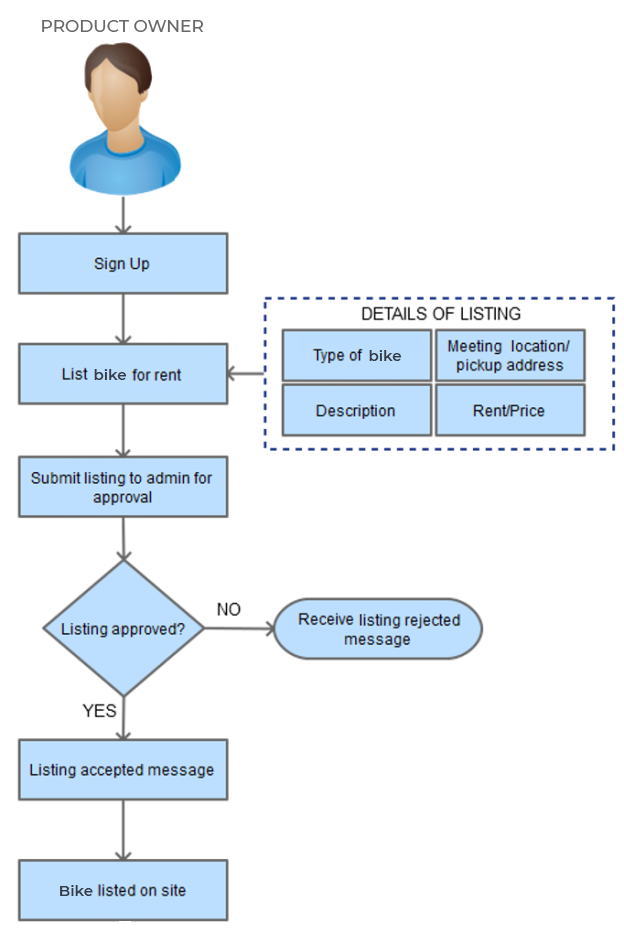
Bike owners can also be given the choice of saving the form and editing it at a later time. Additionally, you should also incorporate options like informing the bike owner about all the insurance policies and guarantees provided by you. This increases user confidence in owners about sharing their bike with a stranger. Finally, opt for bike rental software which simplifies bike listing and renting.
Search Results Page
Other than browsing through the list of all the bikes, the only option users have is to use search. Nowadays, search has become one of the most important features in bike rental software with a sizable inventory. As soon as the users search for a particular location, they are taken to a page that displays all the best matches for that respective search query. Some features suggested by us on the results page are:
- Integrated map: The dedicated section of the search results page can contain a map area along with listings.
- Featured image for each listing: Listings with a featured image (as selected by the accommodation provider) can also be displayed along with per day rent and bike description.
- Filter options: Users should also be able to filter the results based on the type of bike they require, i.e. bike, surfboard or snowboard.
This platform is all about finding the right bike. This is why you should provide an advanced filter where users can screen results further.
Want to Develop a Bike Hire Website With Engaging Features?
Bike Listing Page
When you want to buy a particular product, it is vital that the product page offers you all the information you want to know about it. Following suggestions by FATbit would help you develop an optimal bike listings page:
- A banner image for each listing on top of the page that gives rentees a better idea of the bike.
- In order to give flexibility in booking, you can offer various price points where rentees can rent bikes on per hour, per day or per week basis.
- Users can also put in pickup and drop off time while requesting the bike.
- A review system where rentees can give reviews on the rented bike. This assists other rentees in making a decision.
Request Bike
During our analysis of several platforms, we found that rentees often have some queries that they want to clear from the bike owner before renting. To assist rentees with such queries on your platform, you can adopt a unique booking model. Under this model, the rentee cannot book a bike right away. The rentee gets the option to communicate with the bike owner before finalizing a decision.
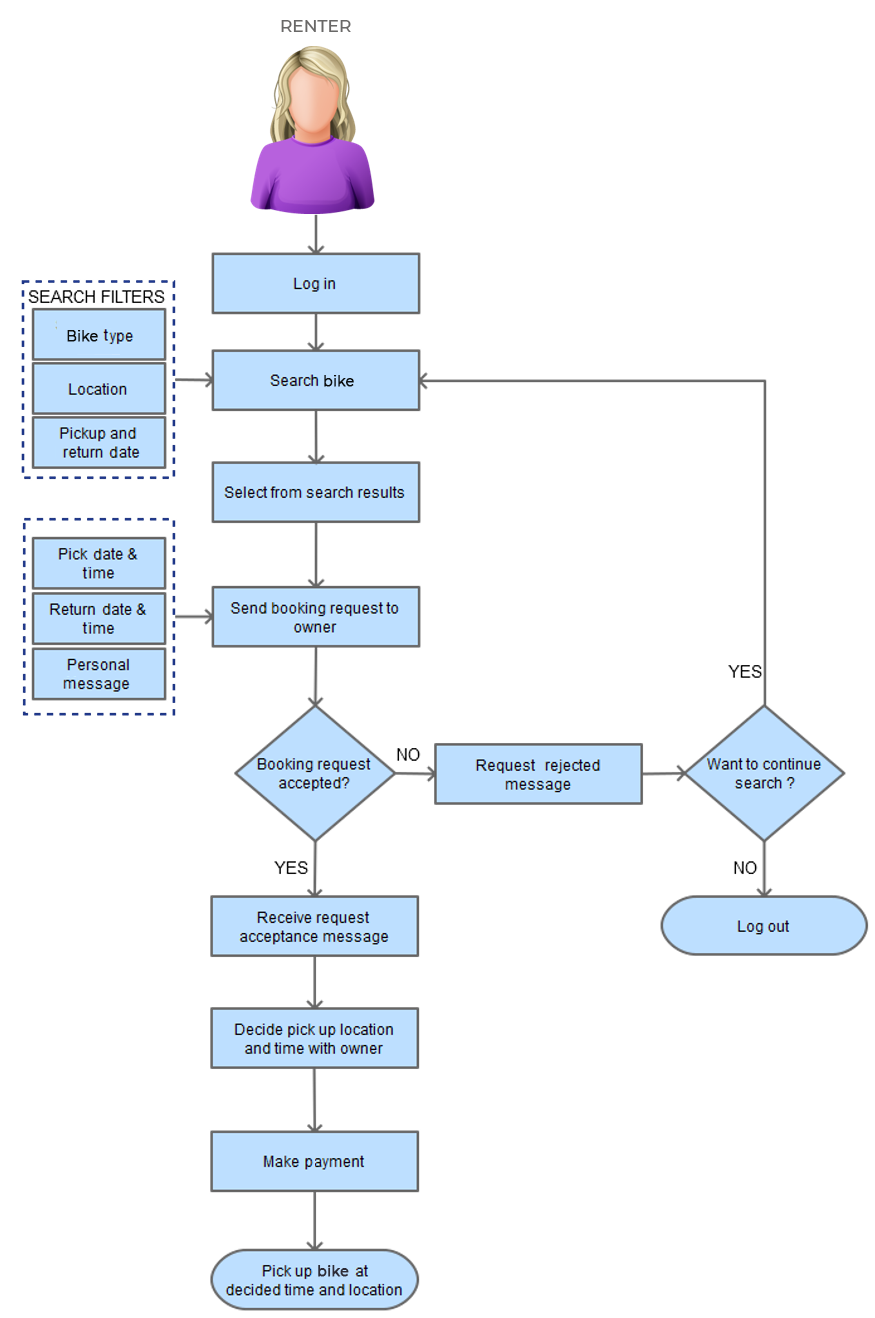
Rentees can also have a direct conversation with the bike owner to gather more information about the bike. If the owner agrees to the booking, then, the rentee can go ahead with the payment. This is an innovative feature created to make bookings hassle-free.
Bike Cancellation
As the overall process of booking involves approvals from bike owners, rentees can have the option to make multiple bookings. Additionally, if need be, rentees can also cancel any reservation before the payment. The booking page should describe all the information related to booking and payment process.
Dashboard
The dashboard is often touted to be the backbone of every eCommerce website. This is because dashboards provide control to the marketplace owner, bike owner and rentee over their most important actions. On a dashboard, all information needs to be organized in such a way that users can handle the basic tasks with ease. The dashboard should display all the booking requests as well as bikes listed.
Mobile App & Responsive Website
In order to reach mobile users, you need to make your website responsive. you can also create dedicated apps for Android and iOS.
Now that we have listed the features that your bike renting website or app cannot do without, let’s have a look at some essential areas you need to take into account:
Suggestions to Create an Impressive Bike-renting Platform
- If your website has presence in different countries, it should accept payments in different currencies. If it only uses and displays a single currency then it can create a hassle for users from other countries, which is not in the best interests of a global peer-to-peer bike renting platform.
- A blog is vital to connect with new users and share important news with followers. This is why you must ensure to have a dedicated blog on your website, where users can gather important information.
- Real-time chat functionality has become an industry standard in the current times. Gone are those days when users had to wait for hours or even days to get their queries resolved. This is why when it comes to the help section you can also have a chat feature embedded rather than plain email.
Final Thoughts
We have incorporated some unique ideas in order to make your website stand out. If you are planning a peer-to-peer bike renting platform like Spinlister, Rentbikenow or Spokefly then, these features are a must for you. In addition to these features, improvements suggested by FATbit can help you create a successful bike renting marketplace website.
Just buying an ample marketplace system will not guarantee success; you also need to make sure that it is feature-rich as well as flexible. Discuss your website and application requirements with a team of UX designers and developers to launch a website.