Tired of scrolling through thousands of webpages and exploring solutions, still confused about deciding on the right enterprise marketplace software?
This endless analysis loop delays time-to-market. While competitors are actively onboarding vendors, capturing opportunities, and capitalizing on market share early. But don’t worry, this comparison blog will guide you through making a final decision.
It’s not only you who is struggling. Businesses planning to launch enterprise-level marketplaces find themselves in the same situation. The paradox of choice leads to decision fatigue.
Moreover, businesses compare enterprise marketplace software at different levels. Therefore, sometimes they find a few solutions right fit and sometimes wrong, and they remain on the same page even after conducting extensive research and analysis.
However, to help you decide on the best solution, the informative blog compares the best enterprise marketplace software on 10 parameters that businesses must consider when exploring ReadyName marketplace options. The detailed comparison will make your decision easy and help you find the perfect solution.
Enterprise marketplace software enables businesses to build and operate a marketplace with complex procurement workflows. The capabilities it brings are different from a simple eCommerce solution that supports standard features and functionality. The solution meets unique and complex transactional needs. It provides a complete ecosystem that connects buyers, suppliers and the marketplace operator to complete transactions seamlessly.
Key Comparisons: 10 Key Things to Consider When Choosing an Enterprise Marketplace Software
Each marketplace offers nearly the same features. Then how can one choose the right fit?
Selecting an enterprise marketplace software is a strategic decision. You need to tick some checkboxes to ensure whether the solution is the right fit, such as aligning with your specific requirements, offering complete control, and being future-proof.
There are several checkpoints that you need to tick when deciding on enterprise marketplace software.
However, this section highlights the top 10 key comparisons that a business needs to consider. At the same time, each solution compared in the next section is evaluated based on these selection criteria.
1. Multi-Vendor Capabilities
Dedicated multi-vendor enterprise marketplace software is the priority. Prioritize a solution specially designed for multi-vendor operations. A purpose-built solution can easily handle complex marketplace dynamics, ensure seamless operations, and enhance user experiences. However, a software solution that relies on tools may lead to several performance bottlenecks and add additional costs associated with third-party integration.
2. Support Core Features
A marketplace that supports core features vendor management, catalog management, commission management, order management, payment processing, and more enhances overall user experience. It allows buyers, vendors and admins to navigate, manage and complete transactions seamlessly. Moreover, it enables businesses to tap into the market faster without putting effort into developing features or configuring necessary features.
3. Hosting Type
Enterprise marketplace software available in the market is primarily of two types based on their hosting. One is vendor-hosted (cloudSaaS-based) and another is self-hosted (on-premise or user-hosted). Checking the hosting type is critical because it defines your platform’s performance, scalability, security, implementation costs, and the level of control your business requires in the future.
4. Customization Flexibility
Customization is another critical consideration that a business should consider when comparing enterprise marketplace software. It allows businesses to tailor the solution as per unique branding needs. They can design custom features, implement updates, and integrate required updates. Therefore, rather than choosing a solution with a rigid template, you can look for an enterprise marketplace software that is fully customizable.
5. Scalability
Choosing scalable enterprise marketplace software gives you the flexibility to grow your business without worrying about the platform’s performance. It enables businesses to establish a future-proof digital infrastructure that can easily handle traffic spikes and an increased number of transactions without leading to significant challenges.
6. Access and Control
Source code access provides operational independence, in-depth customization flexibility and complete control over your marketplace. Therefore, while comparing enterprise multi-vendor marketplace software, you can see if the solution offers source code access. It enables businesses to deeply customize workflows, seamlessly integrate existing tools, and implement code-level changes, providing more stability and control.
7. Third-Party Integration Compatibility
An enterprise marketplace software can’t offer all features and functionality built in. The solution needs several integrations to enable specialized functionalities and services, such as workflow automation, payment processing, shipping, tax management, SEO and marketing. Therefore, compatibility with third-party integrations is essential and you should prioritize enterprise-level marketplace software that is compatible with integrations.
8. Pricing
When comparing enterprise marketplace software pricing, don’t just look for the initial cost. Rather, calculate the total cost of ownership after a certain period. I’m sure building and operating a marketplace is your long-term goal. Hence, calculating total cost of ownership would be a smart way to decide which one of the solutions is cost-effective in the long run.
9. Technical Support
Technical support is non-negotiable. You need responsive support to deal with any unexpected bugs and errors. It minimizes the risk of prolonged operational downtime and revenue losses. Technical support helps diagnose and resolve issues promptly. Moreover, several instances necessitate technical support.
10. Reviews and Ratings
Checking reviews and ratings provides insights from real users, eliminating the guesswork. It helps businesses make an informed decision. G2, Capterra and GoodFirms are a few popular review platforms where you can check real users’ feedback and validate if the solution offers exactly what it claims.
The Best Enterprise Marketplace Software Compared for 2026 and 2027
Ready to launch your marketplace using enterprise marketplace software? Not every platform is the right fit for your idea. You need to explore, filter and decide on the best solution available.
We have curated the top enterprise marketplace software solutions leading the industry today and compared the critical factors to consider before getting started with a solution. Let’s explore the list below and find the best enterprise marketplace software that suits your idea.
1. Yo!kart
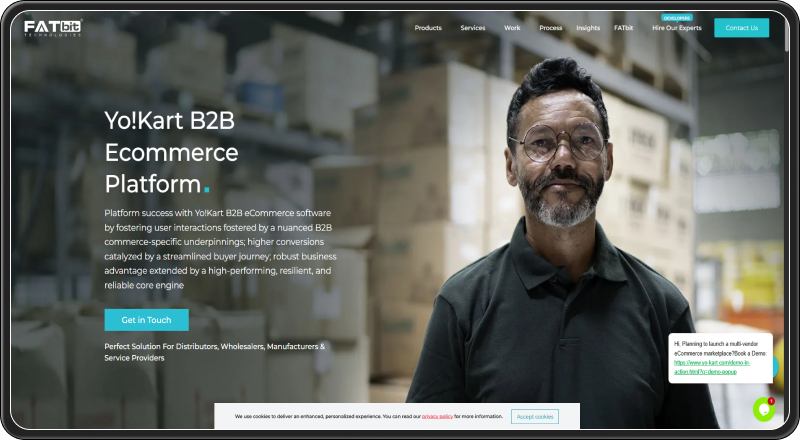
Yo!Kart is one of the best and purpose-built enterprise multi-vendor marketplace software solutions. It empowers businesses with a scalable and feature-rich digital infrastructure. The solution delivers exactly what they expect. Moreover, Yo!Kart B2B is designed with distinct features and functionality to handle large and complex business transactions.
Since its launch in 2015, the solution has been leading the eCommerce industry. Yo!Kart has empowered over 5,000 global businesses, helping them build online multi-vendor marketplaces across diverse niches. Businesses prefer Yo!Kart due to its long-term cost-efficiency, control and access, customization flexibility, limitless scalability, one-time payment and lifetime licensing model.
Key Comparisons:
1. Multi-Vendor Capabilities: Yo!Kart is built specifically to support multi-vendor operations. Marketplace can onboard vendors, list millions of products, and offer separate vendor storefronts with dedicated seller dashboards.
2. Support Core Features: It supports enterprise marketplace features such as RFQ management, MOQ management, tiered pricing, bulk order discounts, custom invoicing and flexible payment, allowing businesses to manage complex operations.
3. Hosting Type: Yo!Kart is a self-hosted enterprise marketplace software. It offers complete control over hosting and the marketplace, rather than locking your business into the vendor’s cloud environment. You can host your marketplace on your preferred server.
4. Customization Flexibility: The solution is fully customizable. Since YoKart’s source code is accessible, you can tailor the solution as per your unique and highly personalized business’s demands. If you don’t want to go through the hassle of custom development, you can also leverage services offered by Yo!Kart team.
5. Scalability: Yo!Kart is designed to scale. It supports marketplace growth and expansion, from its early-stage launches to becoming a giant with millions of vendors and unlimited product listings.
6. Access and Control: Yo!Kart offers complete control and access over your multi-vendor eCommerce platform. From choosing your preferred server and providing you access to the source code and offering a lifetime license to use the software, you own the solution.
7. Third-Party Integration Compatibility: YoKart comes with 20+ pre-integrated payment gateways, including Stripe Connect and PayPal, alongside other necessary integrations such as ShipStation, TaxJar, Avalara, Mailchimp, and more. Moreover, you can also flexibly integrate APIs and tools you want.
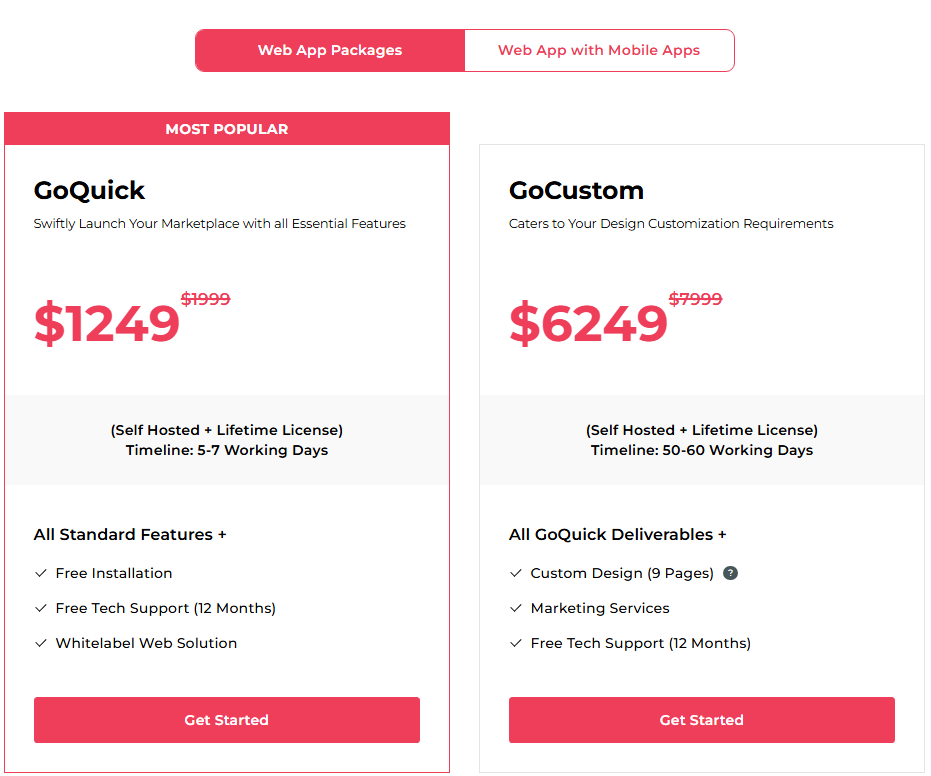
8. Pricing: The solution is available at aone-time licensing fee starting at $1249. However, the price may vary depending on the package you choose. Yo!Kart is cost-efficient because it doesn’t charge any recurring subscription or transaction fees.
9. Technical Support: Yo!Kart offers free technical support, backed by FATbit technologies. With each solution installed, a dedicated project manager is assigned to handle any technical and unexpected challenges associated with the system.
10. Reviews and Ratings: Clients across popular review platforms highlight the advantages of using Yo!Kart. Many find the solution feature-rich, scalable, flexible, and cost-efficient. Most of them also praised technical support, prompt responses, and accelerated time to market.
Ratings:
GoodFirms: 4.8 out of 5
SoftwareSuggest: 4.8 out of 5
G2: 4.6 out of 5
Capterra: 4.2 out of 5
TrustRadius: 9 out of 10
Explore and Ensure If YoKart is the Best Selection for You
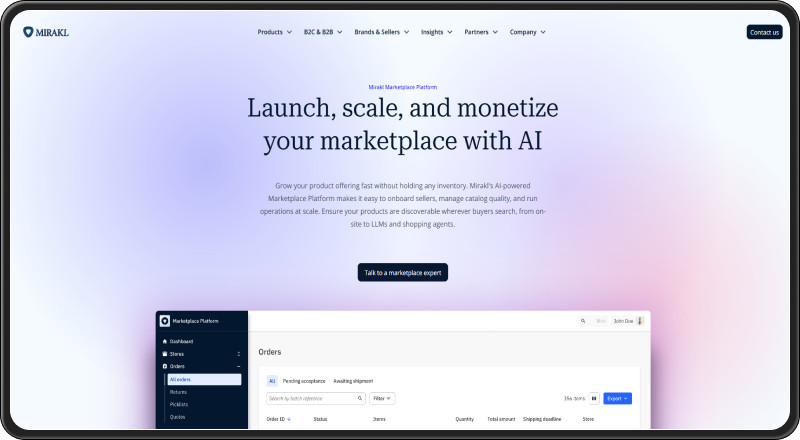
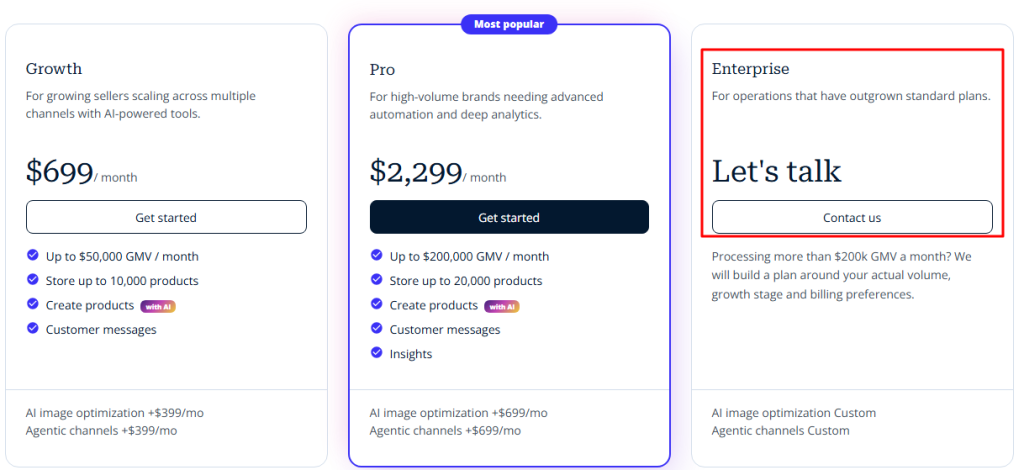
Mirakl is a SaaS solution. It’s another of the most recognized names in enterprise marketplace software. Large enterprises leverage the platform to onboard and manage third-party seller networks at scale.
Whether launching a marketplace, scaling dropshipping or integrating new channels, Mirakl helps businesses grow and unlock new opportunities. It transforms complex business operations into a seamless journey. However, when it comes to time-to-launch, launching a marketplace with Mirakl may take anywhere between 3 to 6 months.
Key Comparisons:
1. Multi-Vendor Capabilities: Mirakl is built for marketplaces and dropshipping operations. Retailers running a third-party seller network at a large scale can utilize the solution.
2. Support Core Features: Mirakl supports multi-vendor marketplace features built-in. It enables seller onboarding, catalog management, commission and payout management, multi-currency and multi-region support, and real-time updates.
3. Hosting Type: Fully managed SaaS, hosted and maintained by Mirakl.
4. Customization Flexibility: It enables customization but not in-depth. You can’t access the source code.
5. Scalability: Mirakl is used by large and enterprise-level businesses. It can handle extensive seller networks and high transaction throughout.
6. Access and Control: Mirakl is a SaaS-based solution. It can limit control and access in many ways.
7. Third-Party Integration Compatibility: Mirakl offers strong pre-integrated ecosystems. It integrates with several necessary APIs and tools. However, additional integration is subject to support and compatibility with the existing technology.
8. Pricing: You need to quote pricing for an enterprise marketplace solution. It typically varies based on operator count, transaction volume, and GMV.
9. Technical Support: Mirakl doesn’t offer free technical support. It provides services to enterprise marketplaces through customized annual plans.
10. Reviews and Ratings: Mirakl is a big name in the enterprise-level market. Recognized by global leaders, the solution has empowered significant large businesses.
Ratings:
GoodFirms: No ratings available
SoftwareSuggest: 4.0 out of 5
G2: 4.1 out of 5
Capterra: 4.5 out of 5
TrustRadius: 8.5 out of 10
3. Marketplacer
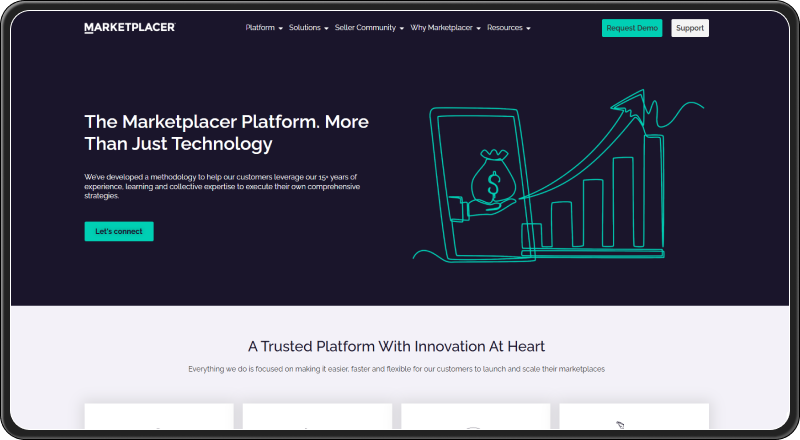
Marketplacer is again a SaaS-based solution that enables marketplace and dropshipping capabilities. It serves large enterprises as well as mid-sized brands. It helps businesses to extend their product range through third-party sellers without holding inventory themselves.
Businesses can integrate Marketplacer into their existing eCommerce system, layering an ecosystem rather than replacing it. Retailers, distributors, and franchise networks that need marketplace capabilities can leverage Marketplacer and unlock growth opportunities for their businesses. Marketplacer also provides an opportunity to connect a large number of global sellers from its existing community.
However, technical expertise is required when transforming your existing eCommerce platform with Marketplacer. Regardless of back-end development, you need to update the platform’s UI (User Interface) to introduce the concept of a multi-seller. You need to display seller names, category list, shopping cart, checkout and other back-end login features that necessitate custom development expertise.
Key Comparisons:
1. Multi-Vendor Capabilities: Marketplacer enables multi-vendor capabilities into your current eCommerce platform through APIs and pre-built connectors without the need for replatforming.
2. Support Core Features: Seller onboarding, product information management, commission management, and order/shipment tracking built for complex, multi-party operations.
3. Hosting Type: SaaS, cloud-hosted, designed to integrate with the platform’s existing ecosystem.
4. Customization Flexibility: It can be aligned with your existing eCommerce platform, but doesn’t allow deep customization.
5. Scalability: Supports growth and expansion as the solution serves large enterprises.
6. Access and Control: Limited due to its SaaS nature; no code-level access.
7. Third-Party Integration Compatibility: Marketplacer is itself designed to integrate with existing eCommerce platforms.
8. Pricing: Custom-quoted based on business volume, integrations, and support level.
9. Technical Support: Reviewers consistently describe the support team as responsive. However, the technical support is paid.
10. Reviews and Ratings: Marketplacer user ratings and review scores show strong satisfaction. However, numbers are very low compared to several solutions.
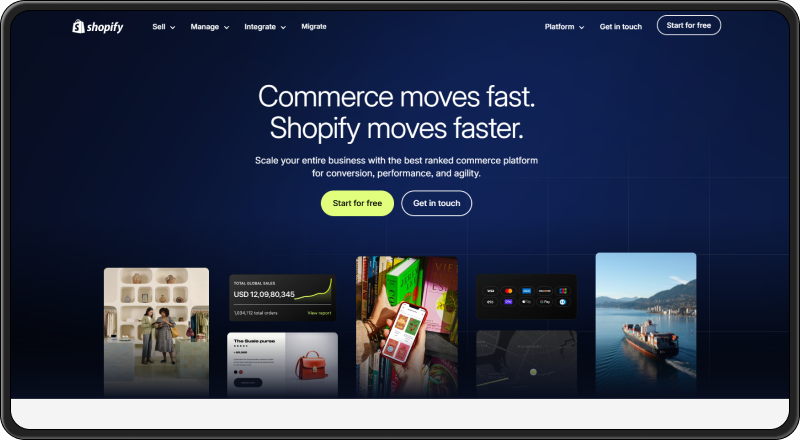
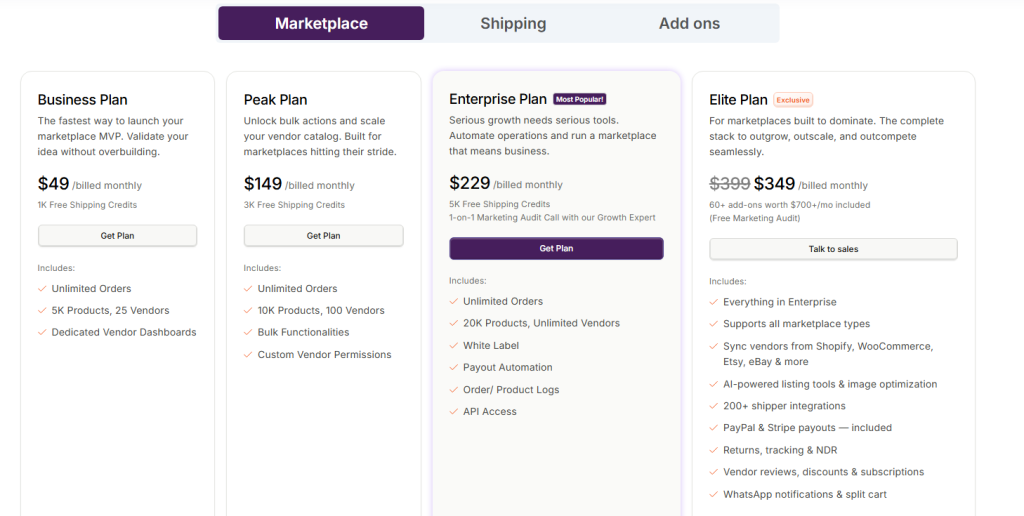
Shopify is an enterprise-level eCommerce solution, but for a single vendor. It’s not natively designed for multi-vendor. However, you can operate a multi-vendor marketplace with Shopify Plus by integrating Shipturtle. It combines enterprise-grade multi-vendor marketplace technology and supports diverse business models.
You can build and operate product-based, services-based, rental, auction base and marketplace businesses. However, there are several challenges as well that you may encounter, such as real-time inventory synchronization, product variant limits, order and shipping fragmentation, and commission and payout. Ensuring consistent user experience can also be a challenge.
Key Comparisons:
1. Multi-Vendor Capabilities: Shopify Plus is not a purpose-built marketplace platform.
2. Support Core Features: Multi-vendor features are typically enabled through extensions like Shipturtle.
3. Hosting Type: Shopify Plus is fully hosted SaaS.
4. Customization Flexibility: Shopify is optimized for headless and you can customize your platform using APIs and third-party apps.
5. Scalability: Scales at additional costs.
6. Access and Control: Limited due to its SaaS nature; no code-level access.
7. Third-Party Integration Compatibility: Marketplacer is itself designed to integrate with existing eCommerce platforms.
8. Pricing: Shopify Plus pricing starts at $2,300 (approx $27,600 billed yearly) per month for a 3-year term and $2,500 (approx. $30,000 billed yearly) per month for a 1-year term. Alongside the prices of Shipturtle monthly.
9. Technical Support: Technical support is shared between Shopify and Shipturtle. Shopify handles your main online store platform, and Shipturtle handles the multi-vendor app features.
10. Reviews and Ratings: Marketplacer user ratings and review scores show strong satisfaction. However, numbers are very low compared to several solutions. No reviews and ratings found on several platforms.
Shopify Plus Ratings:
GoodFirms: 4.2 Out of 5
SoftwareSuggest: 4.4 Out of 5
G2: 4.4 out of 5
Capterra: 4.7 out of 5
TrustRadius: 8.9 Out of 10
Shipturtle Ratings:
GoodFirms: No ratings available
SoftwareSuggest: No ratings available
G2: 4.5 out of 5
Capterra: 4.9 out of 5
TrustRadius: No ratings available
5. Orocommerce
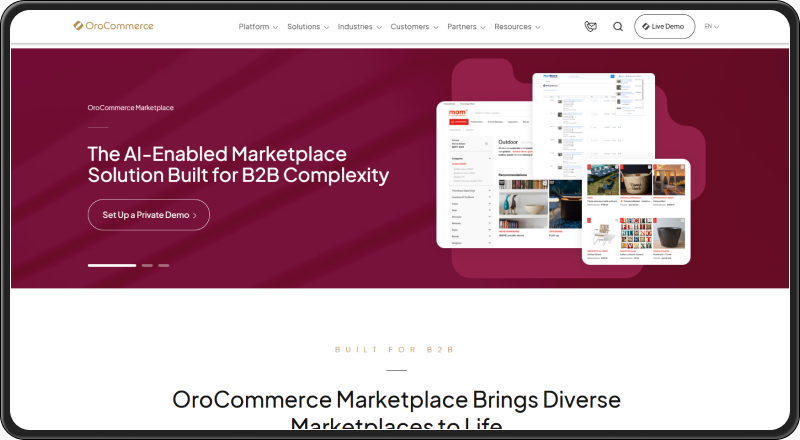
OroCommerce is a leading enterprise software that helps businesses move faster in the digital economy. It’s an open-source B2B commerce platform built for manufacturers, distributors, and wholesalers handling complex sales processes. From streamlining operations to enhancing users’ experience, it delivers maximum value.
It’s a future-proof solution that primarily focuses on enterprise-level B2B businesses. However, the solution also enables multi-vendor capabilities through OroMarketplace. It is a purpose-built multi-vendor solution that allows businesses to launch and operate a marketplace rather than just a retail business.
OroCommerce claims to have a catalog depth of up to 8 million SKUs, which also defines the solution as the right fit for enterprises. The solution also maintains enterprise-level security via 2FA, SSO, security audits, and compliance with PCI DSS and SOC2 Types I and II.
Key Comparisons:
1. Multi-Vendor Capabilities: Marketplace capabilities exist, but OroCommerce’s core strength is B2B commerce. However, you can launch and operate an enterprise-level multi-vendor marketplace using OroMarketplace.
2. Support Core Features: OroCommerce core features include corporate account management, custom pricing, RFQ, contract pricing, and multi-org workflows and more
3. Hosting Type: OroCommerce supports both SaaS and self-hosted deployment models, giving you the flexibility to choose how you want to run the platform.
4. Customization Flexibility: OroCommerce is an open-source solution that offers high flexibility with customizations.
5. Scalability: OroCommerce is a scalable solution, designed for mid- to large-sized businesses.
6. Access and Control: Being an open-source solution, OroCommerce offers more control and access.
7. Third-Party Integration Compatibility: Its API-first design supports ERP, PIM, WMS, and CRM integrations.
8. Pricing: OroCommerce enterprise edition and OroMarketplace pricing available at a custom quote.
9. Technical Support: Technical support is available on paid plans.
10. Reviews and Ratings: Several positive reviews are available on popular platforms like G2. At the same time, reviewers reported pricing is higher than alternatives and the platform has a steeper learning curve for non-developers.
Ratings:
GoodFirms: Page is unavailable
SoftwareSuggest: 4.8 out of 5
G2: 3.5 out of 5
Capterra: 4.7out of 5
TrustRadius: No ratings available
A Quick Comparison Table: Top 5 Enterprise Marketplace Software
Enterprise Software
Hosting Type
Source Code Access
Multi-Vendor Capabilities
Pricing Model
Best For
Yo!Kart
Self-hosted
Yes
Purpose-built Software
One-time License
Businesses looking for complete access and control
Mirakl
SaaS
No
Native
Recurring (Subscription + GMV Based)
Large retailers adding third-party seller networks
Marketplacer
SaaS
No
Yes
Recurring (Based on business volume and requirements)
Enterprises extending an existing eCommerce platform
Shopify Plus with Shipturtle
SaaS
No
Through Multi-vendor APIs
Monthly Recurring + GMV
Businesses operating a marketplace on Shopify Plus
OroCommerce (OroMulti-Vendor)
Open Source (Self-hosted/SaaS)
Yes
Supports Multi-vendor Features
Free or Enterprise Subscription
B2B distributors and manufacturers
Not Sure Which Enterprise Software is the Right Fit for You?
Not all solutions are the right fit for all. In this enterprise marketplace software comparison blog, you went through several readymade solutions in the market. Comparing each of 10 different key comparison parameters. Each serves different businesses’ needs and aligns perfectly according to one’s preference.
Businesses that want full source code access and freedom from recurring GMV-based fees choose enterprise marketplace software like Yo!Kart. Enterprises that want to integrate marketplace capability onto an existing retail operation prefer Mirakl and Marketplacer.
B2B businesses operating online stores can extend multi-vendor capabilities with OroMarketplace when operating a business using OroCommerce or can integrate Shipturtle if operating a business using Shopify Plus.
FAQs
Which enterprise-level marketplace software is the best?
There is no one best marketplace software fit for all. However, if you are looking for a solution that offers maximum control and access, you can find Yo!Kart as one of the best enterprise software solutions.
What is the difference between enterprise marketplace software and a standard eCommerce solution?
A standard eCommerce solution is built for a single seller. However, enterprise marketplace software natively supports multiple independent vendors, each with their own storefront, inventory, and payouts, on a single unified buyer-facing platform. Moreover, they enable features and functionality out of the box required for high-volume, personalized transactions.
Subscription-based or one-time license: which pricing model is cost-effective?
Subscription-based/SaaS solutions that follow monthly subscription plans require lower upfront costs, but in the long run they are expensive due to recurring fees and GMV-based charges that compound over time. One-time licensed, self-hosted marketplace solutions like Yo!Kart have a higher upfront cost but can become significantly cheaper over a 2-5 year period since there are no ongoing platform or revenue-share fees.
Can I switch marketplace platforms later with the growing business’s demand?
Yes, you can switch platforms later. However, the migration cost and complexity vary. Self-hosted solutions generally offer more control during migration, while deeply embedded SaaS platforms can involve more significant replatforming effort or may necessitate replatforming completely.
All innovation starts with an idea to solve real-world problems. At FATbit Technologies we are passionate about driving digital transformation to prepare businesses for a digital-first tomorrow. Let’s discuss your BIG idea NOW.
Disclaimer: The Blog has been created with consideration and care. We strive to ensure that all information is as complete, correct, comprehensible, accurate and up-to-date as possible. Despite our continuing efforts, we cannot guarantee that the information made available is complete, correct, accurate or up-to-date. We advise - the readers should not take decisions completely based on the information and views shared by FATbit on its blog, readers should do their own research to further assure themselves before taking any commercial decision. The 3rd party trademarks, logos and screenshots of the websites and mobile applications are property of their respective owners, we are not directly associated with most of them.
Vishal Tiwari is a Senior Strategist, Consultant and Author at FATbit Technologies with 10+ years of industry experience. His expertise spans eCommerce, emerging technology, digital transformation, and business strategy. With a keen eye for detail, a strong analytical mindset and a knack for storytelling, Vishal brings unique perspectives and insights to businesses. He helps entrepreneurs, enterprises, and decision-makers make informed decisions and navigate evolving opportunities in today’s digital-first economy.