Top AI Features to Integrate into Your eCommerce Marketplace in 2026
Views - 2825
AI is bringing a new era for eCommerce. The integration of AI into eCommerce is revolutionizing online trade. Whether it’s B2C (Business-to-Customer), B2B (Business-to-Business), C2C (Customer-to-Customer), or any other type of multi-vendor marketplace, AI technology is behind the rapid transformation.
According to Precedence Research, the global AI (artificial intelligence) in the eCommerce market size is projected to reach $64.03 billion by 2034, growing at a CAGR of 24.34%. The year-on-year growth also indicates the demand and future of eCommerce platforms integrating AI technology.
However, the technology has proven to be the game-changer. Several eCommerce giants, including Amazon, eBay, Walmart and Alibaba, have already leveraged the technology.
If you are an entrepreneur or an eCommerce business owner who wants to integrate AI features into your eCommerce marketplace. This informative craft highlights the top AI features to incorporate into your eCommerce marketplace in 2026.
Understanding AI in eCommerce: What is the Integration of AI into the eCommerce Marketplace?
The integration of AI into the eCommerce marketplace means automation, streamlined operations, prompt responses, personalized recommendations, precise targeting, reduced operational costs, higher conversion rates, and increased sales. In short, AI in eCommerce contributes to operational efficiency and enhances overall experience on the marketplace for buyers, vendors, and administrators.
On the one hand, customers are leveraging technology to search and find products and responses to their queries. On the other hand, vendors are able to automate their product listings, generate descriptions, titles and other content, and plan strategies based on accurate data and insights. At the same time, the marketplace operator automates and operates the platform effortlessly.
Top AI Features to Integrate into Your eCommerce Marketplace in 2026
Whether you’re planning to build an eCommerce marketplace or operating an existing one, you can’t ignore the importance of AI. The implementation of AI features into the eCommerce marketplace is not an experiment but a necessity. Check out the top AI features to integrate into your eCommerce platform in 2026 and explore.
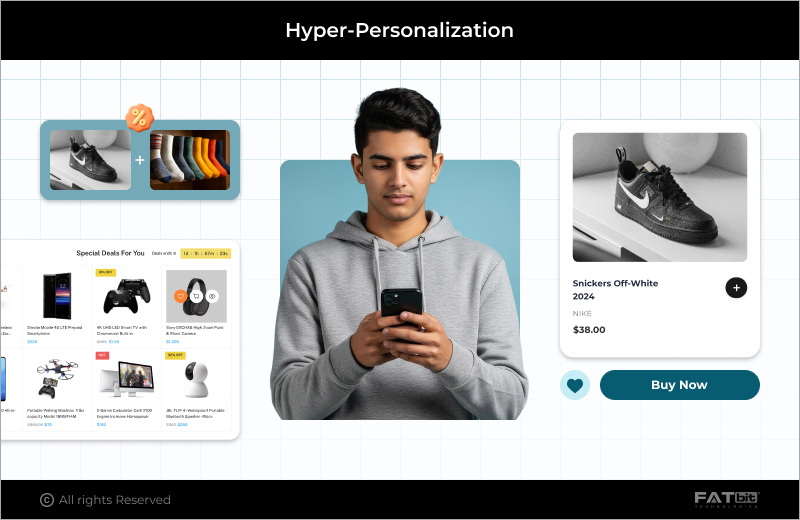
AI-based personalized recommendation in eCommerce isn’t a product that can be customized, but a personalized experience. It’s more about data, analysis and results.
Hyper-personalization, also known as personalized recommendation, is a strategy that makes customers feel like the platform caters to their specific needs when they interact. Customers experience something extraordinary. It provides a list of products or services they need or want to search for, crafting a personalized experience for every visitor.
However, personalized recommendations are neither predictions nor coincidences, but there is AI behind the scenes. AI technology analyzes customers’ browsing behaviour, search history, cart abandonments, purchase patterns and more to offer a data-driven personalized experience when customers visit a marketplace.
The Impact of Hyper Personalization
Improves marketplace experience and overall customer satisfaction.
Enables businesses to offer products and services that customers actually need.
Contributes to increased conversion rates and boosts sales.
Fosters customer loyalty and helps platforms retain customers.
💡 Highlights:
According to research from McKinsey, 71% consumers expect businesses to deliver personalized interactions. At the same time, a marketplace without personalized offerings leads to cart abandonment and missed opportunities, and about 76% of consumers get frustrated when their expectations for personalization are not met by businesses.
2. Chatbots and Virtual Assistants (Customer Support)
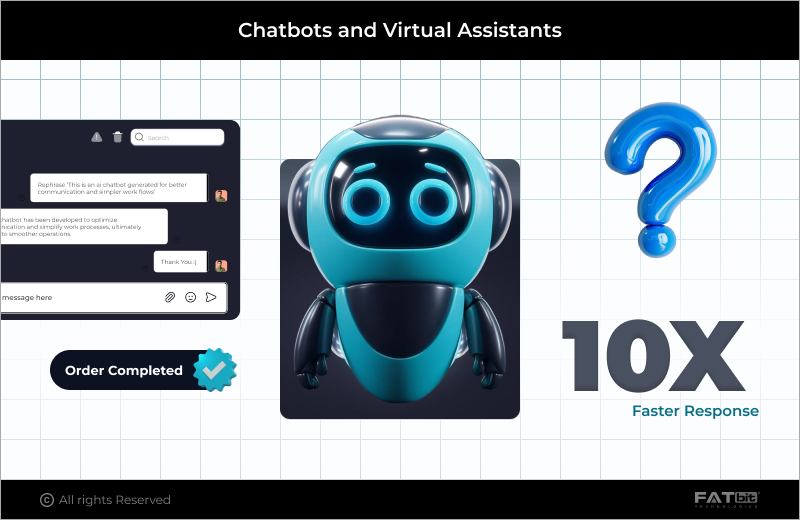
Chatbots and virtual assistants have solved one of the biggest challenges in eCommerce, that’s customer support. They mimic human interaction and provide personalized resolutions, real-time support and assistance. However, it had never been easier for marketplaces to respond to millions of customers at a time promptly before AI chatbots and visual assistants took charge.
Today, an eCommerce marketplace can respond to customers’ queries easily and instantly without the need for support staff in significant numbers, round the clock. The technology is active 24/7. Even in sales seasons or peak times, there is no hassle in providing satisfactory customer service. The technology easily handles thousands of queries at a time within seconds. The marketplace owner just needs to integrate AI chatbots and virtual assistants.
Apart from enhancing the overall customer experience by responding to queries promptly and providing resolutions to complaints, AI-based chatbots also enable businesses to manage additional costs associated with support staff and others.
The Impact of Chatbots and Virtual Assistants
eCommerce marketplaces are able to respond to customers 24/7.
Helps marketplaces establish a loyal customer base by enhancing overall customer experience.
Enables businesses to save on support costs and invest in other areas of the value-added services.
Customers get prompt responses to their queries with reduced wait time.
💡 Highlights:
According to G2, chatbots are handling 80% of general queries of the customers and about 90% businesses reported faster resolutions to the customers’ queries and experienced a 67% increase in sales after implementing AI chatbots and virtual assistants.
Enhance Customer Support Experience with AI Chatbots
3. Fraud Detection (AI-Powered Data Protection and Security)
Marketplaces operating online often face challenges related to security and fraud. A significant percentage of marketplaces reported fraud related to payment scams, fake sellers, counterfeit goods and more. Moreover, multi-vendor marketplaces are the first target of fraudsters and cybercriminals.
However, after the implementation of AI in eCommerce, the number of marketplace frauds has declined remarkably. Online platforms are using AI and ML to detect fraud and online scammers by analyzing data and detecting weird transactions.
The technology identifies unusual transactions, patterns and suspicious activities such as multiple transactions in a few minutes, transactions in large volumes and more and takes the required action before the transaction takes place through the platform.
The Impact of AI in Detecting and Avoiding Fraud:
AI technology analyzes an enormous amount of data, humanly impossible and detects fraud in real-time.
Eliminates the risk of big financial losses.
Protects customers’ data, including financial and personal details.
Allows businesses to foster trust and credibility among customers.
💡 Highlights:
eCommerce security is a huge cost center. According to Statista, the US merchants are losing about $4.61 for every $1 of fraud, and global losses are projected to hit over $100 billion by 2029.
4. Voice Commerce (Conversational Shopping)
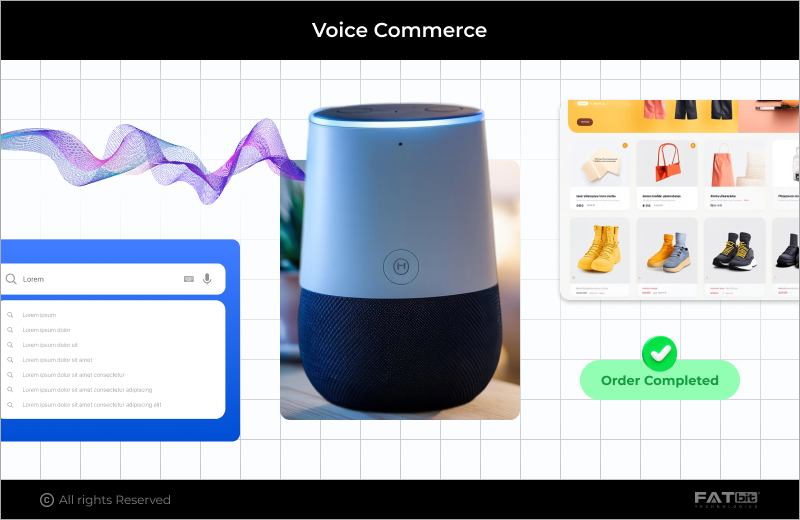
Before AI was introduced, the idea of shopping online using voice commands was almost unreal. However, AI technology made hands-free online shopping possible. Today, shoppers in large numbers are shopping online using voice commands, rather than typing.
Especially with the rise of virtual assistants like Amazon’s Alexa, Apple’s Siri, and Google’s Google Assistant, customers are comfortably giving commands using voice searches and completing transactions. Customers simply need to explain what they are looking for and respond to the queries; the virtual assistants complete transactions and place orders effortlessly.
Amazon is one of the popular examples that incorporated and leveraged the advantages of voice commerce successfully. The platform provides the convenience of voice-enabled shopping. Amazon customers can easily search for products and place orders by giving voice commands to virtual AI assistants.
The Impact of AI Assistants in Voice Commerce
Enables customers to search and complete purchases by giving voice commands.
Enhances the overall online buying experience and encourages repeat purchases.
Allows customers to perform multiple tasks simultaneously.
Eliminates the need for manual typing and going through multiple steps.
💡 Highlights:
According to market.us, the global voice commerce market size recorded $66.5 billion in 2024 and is expected to grow at a CAGR of 26.80% from 2025 to 2034 to surpass $714 billion. Moreover, North America led the voice commerce by covering 37.2% of the market size.
5. Invisible Commerce (Ghost Commerce)
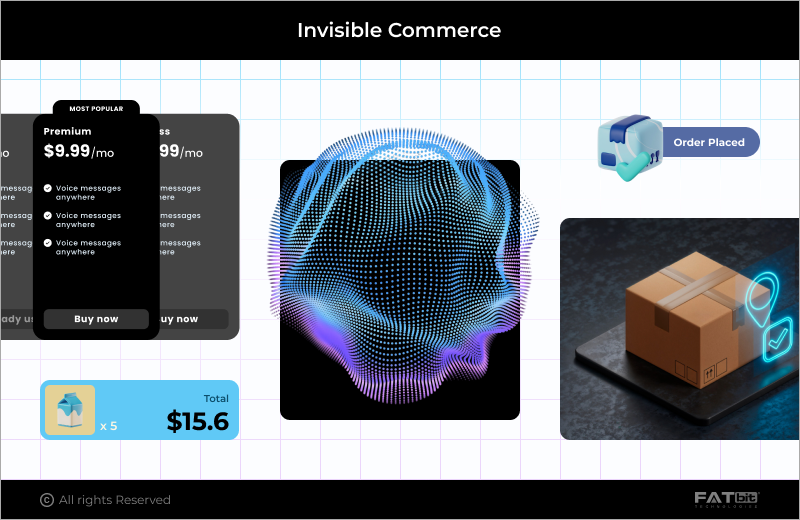
With the advancement of AI technology and the rise of autonomous shopping agents, the world will soon witness invisible commerce, the next-level online shopping experience. Buyers will get products delivered before they even realize the need to buy. AI will analyze customer behavior and needs to anticipate future purchases.
From 2026, invisible commerce is set to bring a prominent change. AI technology will ensure frictionless purchases by eliminating the need for browsing platforms, exploring catalogs, following steps, placing orders and more. The autonomous shopping agents will make purchases without human intervention.
AI technology will automate the mechanics of shopping, including finding products, adding them to a cart, applying discounts, managing payment and placing orders. The buyers will be able to automate the repeat purchases, making the transaction invisible.
The Impact of Autonomous Shopping Agents
Enables frictionless ordering before the user realizes they need it.
Eliminated the need for manual effort or human intervention.
Automates the routine and repetitive purchases.
Reduces cart abandonment and increases conversion rates.
💡 Highlights:
By 2030, a significant percentage of online transactions will be influenced by invisible commerce, especially B2B transactions, where more than 50% of orders are repeated. The technology will surely emerge as a dominant force for B2B marketplaces.
6. AI-enables Virtual Product Try-ons (Augmented Reality and Virtual Reality)
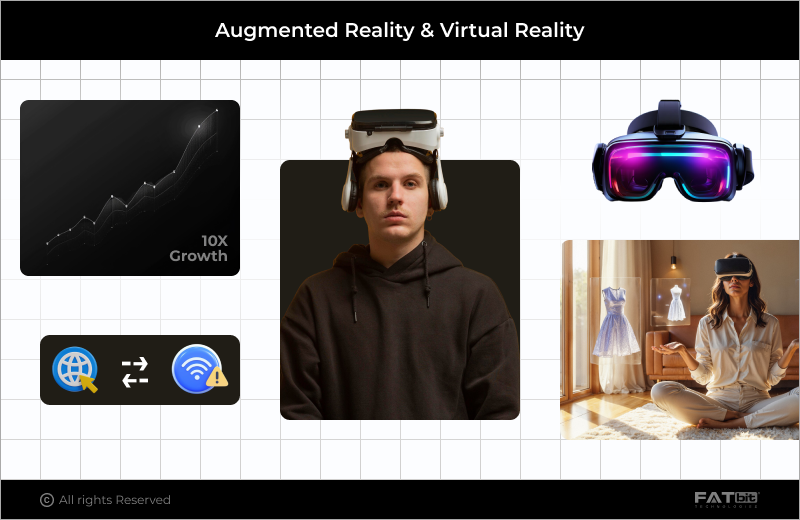
AR and VR, both technologies, are powered by artificial intelligence to enable shoppers to get a digital preview of the products they are planning to buy. The technology creates a virtual preview for the product without the need for a physical product. Users can either try the product on themselves or in their space real time and decide whether the product is the right fit for them or their space.
Top multi-vendor marketplaces, including Amazon, Alibaba, Etsy and eBay, integrate augmented (AR) reality and virtual reality (VR) technology into their platforms and allow users to visualize products in their real space before they buy them.
AI technology bridges the gap between in-store shopping and online shopping. AR and VR overlay digital information onto the real world to offer an immersive and interactive online buying experience. Ultimately, these technologies help businesses reduce returns by enhancing the overall shopping experience.
The Impact of AR (Augmented Reality) and VR (Virtual Reality)
Bridges the gap between online and offline shopping.
Allows customers to visualize products in the real world before they proceed to checkout.
Boosts confidence and enables customers to make an informed decision by analyzing whether the product is the right fit or not.
Reduces the chances of returns by 40% and increases conversion rates over 90% compared to those without AR and VR technologies.
💡 Highlights:
According to Statista, the augmented reality and virtual reality market size in 2025 is projected to be $46.6 billion and expected to grow at a CAGR of 10.27% to reach 75.9 billion by 2030.
7. Smart Image Search (AI-Powered Visual Search)
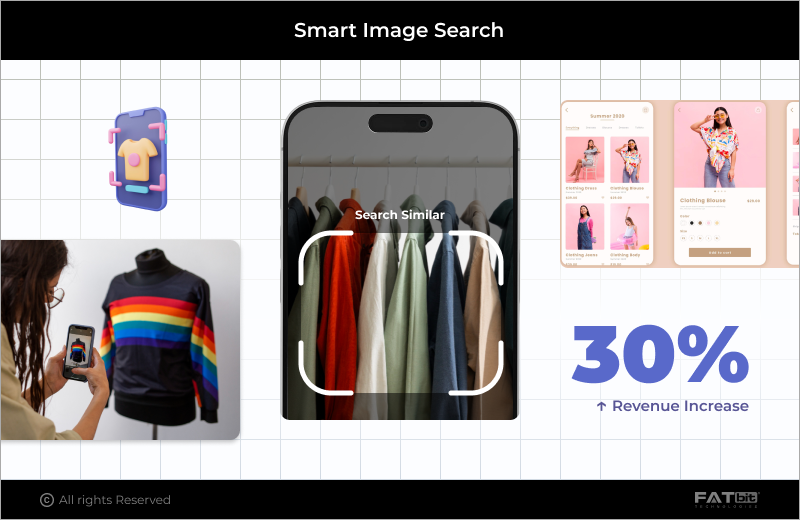
The AI-powered smart search feature is trending. The technology is allowing users to find products simply by clicking or uploading a picture. AI models and algorithms analyze and find the most relevant results from a vast product catalog, making product findings easier and effortless.
Earlier, users were relying on searching for products only by typing. They need to input the right keywords and technology behind them to navigate through keywords. In case there is no relevant title or description, the system failed to find results. However, today they can find the exact match using AI-enabled smart visual searches.
Suppose you find your friend’s T-shirt attractive and want to buy a similar one. You can search and find the exact or a nearly similar one via the smart image search option, saving time and effort.
The Impact of Smart Image Search
Users can easily find a similar product they are looking for.
They don’t rely on product search just by typing and keywords.
AI-based smart image search enhances the overall online buying experience.
The eCommerce platform that integrates a visual search feature has reported to increase revenue by up to 30%.
💡 Highlights:
According to DATA BRIDGE MARKET RESEARCH, the global visual search market is valued at $41.7 billion in 2024 and is forecasted to reach $151.6 billion at a year-on-year growth of 17.5%. In addition, the technology allows users to find a perfect match and encourages faster purchase decisions, up to 47%.
Looking for Software that supports the Integration of Advanced AI Features?
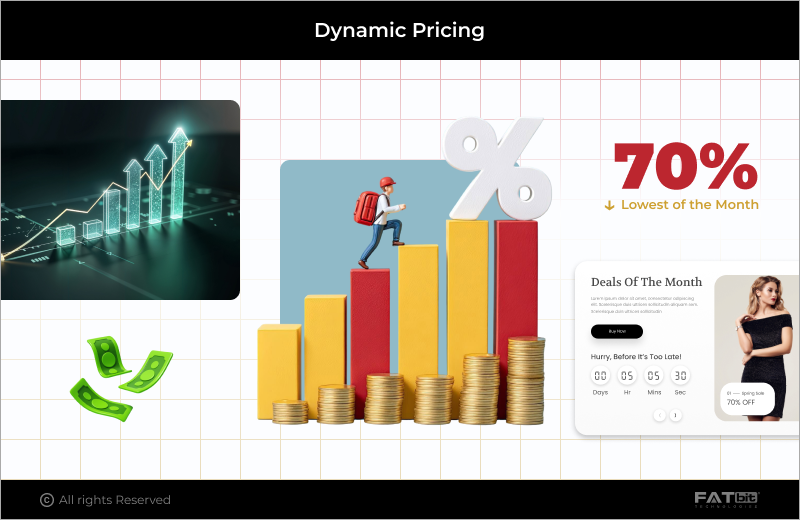
Pricing-related strategies always play critical roles in boosting eCommerce sales. Businesses need to be very competitive with pricing. However, enabling customers to find the best deal on your marketplace by manually analyzing competitors’ pricing strategies is not that easy. Especially when prices are simultaneously updating every second. That’s where AI-driven dynamic pricing comes in. It enables marketplaces to showcase tailored pricing, adapting to changing market conditions.
Instead of uniform pricing, the technology optimizes pricing in real-time based on real-time data. AI-powered dynamic pricing feature analyzes competitors’ pricing, inventory levels, product demand, shopper behaviour and several other factors and showcases the best pricing. Amazon is one of the largest retailers that integrates and implements AI-powered dynamic pricing.
However, the ultimate goal of dynamic pricing is to generate maximum profits for businesses. At the same time, the technology also benefits customers, allowing them to find the best possible deals.
The Impact of Dynamic Pricing
Enables businesses to offer tailored pricing in real time, considering several factors.
Ensures businesses generate maximum profits and sales by offering greater control over pricing strategies.
Helps customers to grab the best deal available.
Eliminates the need for manual effort required in planning pricing strategies.
💡 Highlights:
Dynamic pricing can be a strategic move for online marketplaces. Amazon, a leading eCommerce giant, implements the technology and updates pricing daily. As a result, Amazon experienced a 25% increase in revenue. Moreover, approximately 21 eCommerce platforms are leveraging AI-driven dynamic pricing, and an additional 17% plan to integrate it.
Inventory management is one of the complex and daunting tasks for eCommerce businesses. Maintaining stock, avoiding overstocking, and managing other such logistics-related tasks is not that easy.
However, after the evolution of AI in the eCommerce world, the complexity of inventory management has been transformed into a seamless process. One can easily manage inventory with AI-powered inventory management features. The technology predicts demand, analyzes stock and forecasts sales, contributing to optimized inventory levels.
However, the technology doesn’t just help businesses optimize inventory; it also optimizes costs by automating several associated tasks, including warehouse management.
The Impact of AI in Inventory Management
Enables businesses to optimize inventory levels efficiently.
Predict and forecast demand based on real-time data.
Helps businesses avoid stockouts and overstocking.
Automates operations and allows businesses to optimize costs.
💡 Highlights:
The global market size of AI in supply chain management is forecasted to reach $51012 billion by 2030, according to Grand View Research. In addition, North America is the largest market and the Asian market is the fastest-growing AI-based supply chain management market.
10. Precise Marketing (Higher Conversion)
AI is reshaping and redefining digital marketing. The technology is pushing beyond the boundaries by setting a new benchmark for limitless possibilities. From precise targeting to optimizing full-scale marketing campaigns, artificial intelligence is revolutionizing the trend for marketers.
The technology analyzes a large amount of customer data and allows marketers to plan marketing strategies and run campaigns with highly tailored content and offers. The personalization in marketing increases conversion rates and boosts sales.
Artificial intelligence also predicts future trends and forecasts customer demand. In short, the next-level personalization, real-time data and insights, automating marketing workflows, and performance optimization enable marketing professionals to target customers precisely and maximize ROI (Return on Investment)
The Impact of AI in Marketing
Automates tasks and leads to faster execution of marketing campaigns.
Enables businesses to target customers precisely by making data-driven decisions.
Increases conversion rate and boosts sales via personalized marketing campaigns.
Helps marketers optimize campaigns based on real-time data and insights, contributing to overall business growth and success.
💡 Highlights:
According to Statista, the global market revenues of AI usage in marketing are projected to reach approximately $47 billion in 2025 and are expected to exceed $107 billion by 2028.
Top Multi-Vendor Marketplaces that Leverage AI Features
Several multi-vendor marketplaces leverage AI technology to offer enhanced customer experience, prompt support, automate tasks, manage processes, reduce operational costs and much more. The marketplaces listed below are popular among the list you can explore.
Marketplace
Top AI Feature
Use Cases
Amazon
Personalized Product Recommendation
Dynamic Pricing
Supply Chain Forecasting
Generative AI
Suggests recommended products based on user behavior and purchase history.
AliMe AI chatbot handles over 90% of routine customer queries using NLP.
Enables visual search using smart image recognition.
Identifies fraudulent activities and secures transactions.
Optimizes delivery management and streamlines operations.
eBay
Visual Search
Counterfeit Detection
AI-Powered Messaging Assistant
Background Enhancement
Allows shoppers to find products using images.
Detects counterfeit products in real time.
Helps sellers draft replies to common buyer questions.
Improves product images by removing cluttered backgrounds.
Etsy
Personalized Search and Recommendations
AI-Generated Review Highlights
AI Writing Assistant
Automated and Optimized Listings
Customizes search results and homepage feeds.
Provides quick review summaries for informed decisions.
Drafts faster responses to buyer queries.
Optimizes listings with AI-powered titles and insights.
Walmart
Augmented Reality (AR)
Shopping Assistant (Sparky)
Automated Customer Support
Inventory Management
Helps customers visualize products in their own space.
Finds and compares products with personalized recommendations.
AI chatbots handle routine customer queries.
Manages inventory in real time to avoid stock issues.
The list of eCommerce platforms that integrate AI features and leverage the technology is extensive. However, you can implement AI features that best suit your eCommerce platform based on users’ preferences and operational efficiency.
How to Integrate/Enable AI features in a Multi-vendor Marketplace?
Whether you are building a multi-vendor marketplace or operating an existing one, by enabling AI features you can improve operational efficiency, minimize costs and enhance overall user experience. However, when it comes to integrating AI into the marketplace, you can follow two possible ways: either you can develop features from scratch or enable features via third-party AI tool integrations.
Developing AI Features from Scratch: Developing an AI feature into your marketplace from scratch requires a high level of technical proficiency and knowledge of advanced AI technologies. At the same time, you can’t ignore the need for a significant amount of time and money required to develop features.
Enabling Features via AI Tools: Another option to enable AI features in a multi-vendor marketplace is to integrate AI tools. Rather than developing a custom feature, the marketplace integrates existing AI tools based on their AI feature requirements.
What Makes Yo!Kart the Best Tailored Software for Both; Custom AI Feature Development and AI Tool Integrations
Yo!Kart is a readymade multi-vendor marketplace software. It enables the marketplace operator to build a tailored platform, offering flexibility with customization and third-party integrations. Whether you want to develop a custom AI feature or want to integrate existing AI tools, the software supports both.
On the one hand, Yo!Kart is a fully customizable eCommerce solution that allows extensive customization. Moreover, it’s the customizable source code ownership and scalable architecture that also enable businesses to implement code-level changes, including custom AI features development.
If you need technical expertise and support, the team behind Yo!Kart also provides custom development services and helps you overcome the situation.
On the other hand, if you want to enable AI features via APIs and tools, Yo!Kart’s compatibility with third-party tools and API integration allows you to integrate AI tools and enable features seamlessly.
Build a Marketplace like Amazon, eBay, Walmart and Etsy
From 2026 to 2030, AI is set to dominate the eCommerce landscape. At this juncture, AI is the integrated strategy for businesses. AI-driven features in eCommerce or in your marketplace are not optional but a critical requirement.
From user demand to business needs, automation to personalized recommendations, prompt customer support to precise targeting and valuable insights to cost efficiency, the demand for AI is on the top. AI technology is making everything possible quickly and conveniently with minimum effort.
Undoubtedly, a large number of platforms are leveraging AI technology to drive growth and success. If you are one of those entrepreneurs, startups, or existing marketplace operators who don’t want to be left behind and want your platform to compete, grow and succeed, you can’t overlook the importance of AI.
Moreover, if you are looking for the right solution that doesn’t just support out-of-the-box multi-vendor features but enables AI features, Yo!Kart can be a solution you can get started with.
FAQs
Q 1. What are the challenges of integrating AI into the marketplace?
Ans. Challenges you may encounter while integrating AI features into your marketplace can be a scarcity of skilled experts, incompatible architectures, integration compatibility, high implementation costs, and more. In addition, AI operates on data. If your data is not accurate or appropriate, the outcomes can be manipulated or incorrect. You might face hurdles due to unexpected results and bad user experiences.
Q 2. What are the top AI use cases in eCommerce?
Ans. eCommerce platforms are adopting AI technology in large numbers. Primarily, they are integrating AI-enabled features into the eCommerce platform for personalized recommendations, visual searches, dynamic pricing, customer support, workflow automation, content creation, and streamlined processes.
Q 3. Why does the integration of AI features into your marketplace in 2026 matter?
Ans. The very clear answer to this question is contributing to every aspect of online sales and benefiting customers and businesses in many ways, one of the prominent reasons to integrate AI features into your marketplace in 2026. However, numbers also encourage eCommerce businesses to adopt AI technology.
Over 80% of eCommerce businesses are either integrating AI or have planned to adopt it. Businesses are experiencing increased conversion rates and sales after the implementation of AI technology into their eCommerce platforms. According to Precedence Research, the global AI (artificial intelligence) in the eCommerce market size is projected to grow at a CAGR of 24.34% to reach $64.03 billion by 2034.
Q 4. Is integrating an AI-enabled feature into an eCommerce platform affordable?
Ans. Yes, integrating AI-enabled features into an eCommerce platform is affordable. However, it widely varies depending on the approach you choose, the expertise you have, the technology you need and more such factors.
Q 5. Is Yo!Kart an ideal choice for eCommerce businesses planning to integrate AI features into the marketplace?
Ans. Yes, Yo!Kart is an ideal choice for eCommerce businesses planning to integrate AI features into their marketplaces. The software can be tailored based on their specific customization needs. Whether you want to develop AI features from scratch or want to integrate AI tools, Yo!Kart lets you enable the feature easily.
All innovation starts with an idea to solve real-world problems. At FATbit Technologies we are passionate about driving digital transformation to prepare businesses for a digital-first tomorrow. Let’s discuss your BIG idea NOW.
Disclaimer: The Blog has been created with consideration and care. We strive to ensure that all information is as complete, correct, comprehensible, accurate and up-to-date as possible. Despite our continuing efforts, we cannot guarantee that the information made available is complete, correct, accurate or up-to-date. We advise - the readers should not take decisions completely based on the information and views shared by FATbit on its blog, readers should do their own research to further assure themselves before taking any commercial decision. The 3rd party trademarks, logos and screenshots of the websites and mobile applications are property of their respective owners, we are not directly associated with most of them.
Vishal Tiwari is a writer with a passion for crafting engaging and informative content on diverse topics. With a keen eye for detail and a knack for storytelling, he brings a unique perspective and expertise to adapt his writing style to suit various audiences and industries.