Online Marketplace Development Guide: Explore Everything You Need to Know
Views - 799
Who doesn’t want to become the next Amazon, Alibaba, Etsy or eBay? For every entrepreneur who wants to establish a footprint in the eCommerce world, achieving success like these platforms is a dream.
The idea of building an eCommerce platform is not only for giants. Entrepreneurs and startups can also create their online marketplaces. All they need to do is choose the right approach. However, it’s not wrong to say that developing an online marketplace is not that complex if you are smart enough to make decisions.
This comprehensive craft on online marketplace development will guide you through everything you need to know when building your own multi-vendor marketplace, including what a marketplace is, its types, revenue streams, key features, steps to build, the development approach and much more.
However, before we delve into the blog, let’s take a look at the revenue the eCommerce industry generated and the expected growth in the upcoming years.
The global retail eCommerce market size in 2025 hit $21.62 trillion and projections indicate it will surpass $75.12 trillion by 2034, growing at a CAGR of 14.88%, according to Precedence Research.
An online marketplace is a digital space that connects buyers and sellers. It works as an intermediary between buyers and sellers. Multiple sellers list and sell their products on the marketplace. Buyers also get access to a wide range of products from different categories.
On the one hand, sellers can list their products, providing all the necessary information, including images and other graphics. On the other hand, buyers search and browse products and proceed to checkout if they find the product useful.
The admin is another participant on the online marketplace who takes care of the operational aspects. They ensure that the platform operates seamlessly without any disruption. Moreover, the admin, the online marketplace operator, generates revenue from multiple sources without the need for inventory.
All activities and transactions take place electronically on the online platform. The marketplace users simply need a device connected to the internet that can help them browse and perform tasks as per their specific roles.
What are the Different Types of Online Marketplaces?
Online marketplaces target a diversified group of buyers and sellers. They all connect with their unique needs and initiate transactions differently. Hence, the marketplace required distinct features and functionalities to ensure seamless transactions. Therefore, online marketplaces are built differently and are of different types.
Below are a few popular marketplace types entrepreneurs and business owners should explore before building their marketplace. This will help them understand how marketplaces work and which type of marketplace best suits their idea.
Business-to-Consumer (B2C) Marketplace
As the name suggests, a B2C marketplace connects businesses directly with customers. Businesses (Sellers) list their products and customers can search for and buy them on the platform based on their specific requirements and personal interests.
Examples: Amazon, eBay, Walmart
Business-to-Business (B2B) Marketplace
Unlike B2C, where businesses sell products to customers, B2B marketplaces enable trade between businesses. One acts as a vendor and the other as a customer. Compared to B2C, B2B marketplaces handle large-volume orders and are primarily built for manufacturers, wholesalers, and suppliers.
Examples: Alibaba, Amazon Business, Global Sources
This type of marketplace operates uniquely. Rather than enabling trade for businesses, these platforms connect two individuals based on their personal interests. In short, C2C marketplaces operate vice versa, where both individuals can buy or sell products.
Examples: Etsy, Poshmark, eBay
Product-based Marketplace
This type of marketplace only sells products online. However, the products sold on the platform can either be physical or digital. In short, product-based marketplaces offer products of all types, including new or old and manage shipping to ensure delivery at the doorstep.
Examples: Amazon, Alibaba and Etsy
Service-Based Marketplace
Rather than selling products, a service-based marketplace offers services. This type of platform enables businesses or individuals to provide or book services online. Primarily, there are two different types of participants operating on the platform: first, those who offer services and second, those who avail these services.
Examples: Airbnb, Uber, Upwork
Horizontal Marketplace
Horizontal marketplaces focus on selling products across diverse industries and categories, catering to the needs of a wide customer base. This type of platform is considered a one-stop shop that almost fulfills all the requirements of the target users.
Examples: Amazon, Alibaba, Walmart
Vertical Marketplace
Vertical marketplaces are specialized platforms that focus on the specific needs of customers. Unlike Horizontal marketplaces, they cater to customers looking for products from particular segments and categories. Vertical marketplaces bring specialized niche-based solutions to their targeted customers, which makes the marketplace distinct and helps them build a trusted customer base.
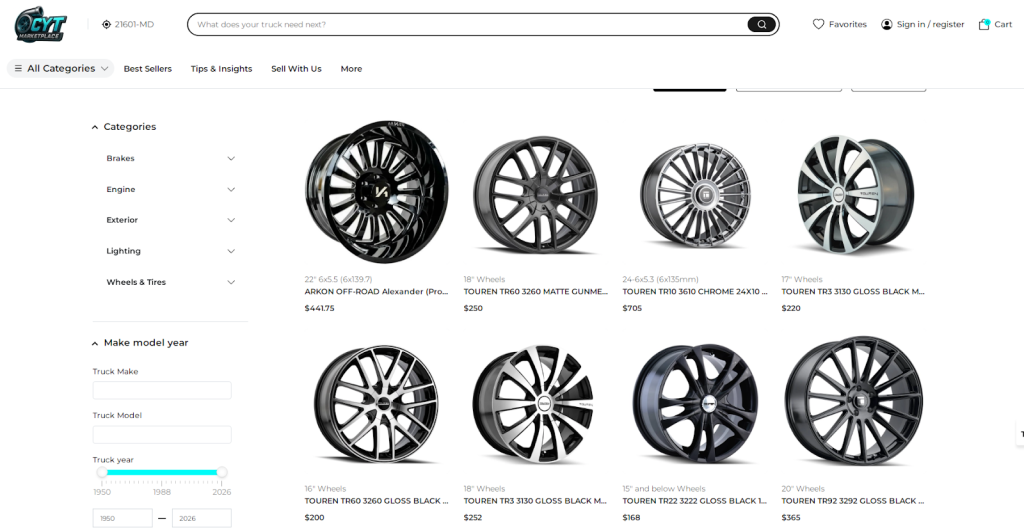
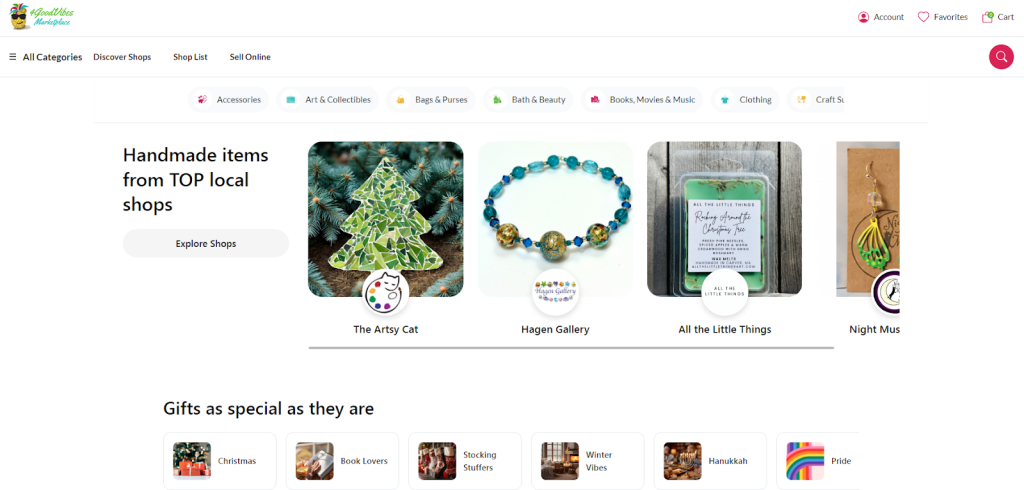
Examples: Etsy, Poshmark, Chewy
Build a Marketplace Similar to Amazon, Alibaba or Etsy
Revenue Model: How Does an Online Marketplace Make Money?
Revenue generation is the ultimate goal of any business. No matter whether operating online or offline. To run and sustain your business, you need to decide on the monetization model.
However, when operating an online marketplace, you can generate revenue from multiple streams. Below are a few popular revenue streams marketplaces use to make money from. Let’s explore them and learn how to make money on an online marketplace.
1. Commission: Commission is one of the most preferred monetization models that marketplaces often choose. A certain percentage or a fixed amount is charged as commission. Marketplaces can charge commission on each sale or transaction that takes place on the platform. Mostly, commission is charged by the vendor.
However, charging commission from customers can also be a revenue-generating strategy. Etsy, Vinted and Airbnb are examples of marketplaces that charge commission from customers. Buyers are also charged commissions on successful payments.
2. Subscription Fees: Marketplaces generate a steady income from monthly, quarterly or yearly subscription fees. A subscription is a kind of membership fee that brings additional value to the subscribers.
Users, including vendors and customers, pay a recurring fee to gain access to the premium services, such as access to the content, prior access and updates on sales, and access to the premium tools, free shipping options and much more.
3. Listing Fees: Marketplaces charge a fee from sellers to list their products. However, the charges can vary depending on the product value or monetization strategy. This model enables marketplaces to generate revenue from the very beginning and also attract quality listings.
At the same time, it can limit the number of listings due to listing fees that ultimately affect the marketplace’s growth. Therefore, marketplaces implementing these revenue streams should keep an eye on the targeted market and then decide on the revenue model accordingly.
4. Featured Listings: Marketplace allows sellers on the platform to promote their products either individually or in multiple. In this monetization model, sellers pay charges to promote their listings. Marketplace, in return, increases the visibility of its products or listings in search results or on the marketplace.
5. Third-party Advertisement: It’s a well-known revenue model that marketplaces make money from. Third-party advertisers rent out ad space on the marketplace if they find the marketplace users useful to them. They promote their businesses via banners, graphics or text, paying charges to the platform.
However, enabling third-party advertisements on the marketplace may lead to a bad customer experience and cause loss. Sometimes, unwanted ads and promotional activities frustrate customers.
Must-Have Features of an eCommerce Multi-Vendor Marketplace
Marketplace requires the necessary features and functionalities to be operational. However, features and functionality can vary depending on the marketplace type, operations and specific needs. Nevertheless, given user-wise features below are critical, which may work for most of the marketplaces.
Buyer-specific Features
User Registration: Buyer’s first interaction on the marketplace begins with user registration. This process includes validating contact and personal details required. However, marketplaces also allow customers to interact without registration initially and later take all the necessary details during checkout.
Advanced Search and Filter: After registration, search is another important feature required for the buyer’s buying journey. Using this feature, buyers search and find the products that they look for. In addition to search, the filter option enables buyers to get more accurate and precise search results.
Add to Cart: Using this feature, buyers can add products to their virtual shopping cart. Later, they may either view the products or proceed to checkout based on their preferences.
Multiple Payment Options: Multiple payment options give buyers flexibility to make payments using their preferred option. At the same time, a marketplace that integrates with multiple gateways also builds trust among buyers.
Easy Checkout: Easy checkout is an important feature on the platform that enables buyers to make purchases effortlessly. One-click checkout is trending these days. However, a significant percentage of buyers left without completing the checkout due to the complex process and multiple steps.
Order Tracking: It’s another important feature on the marketplace. Using this feature, buyers track orders and get updates on their current statuses. Alongside providing order updates, this feature also contributes to reducing the chances of order returns.
Customer Support: Effective customer support can make all the difference. It helps the marketplace build a loyal customer base enhancing overall customer experience. Often, marketplaces fail to provide resolutions on the right that cause users to migrate.
Ratings and Reviews: Ratings and reviews play an important role in building trust among customers. Using these features, customers give ratings and reviews of the products or services based on their experiences, which also helps buyers in making decisions.
Want to Explore Out-of-the-Box Features of an Online Marketplace?
Vendor Registration: Similar to buyers, vendors also need to register on the platform. An easy vendor registration process helps in improving the first interaction of the seller on the platform. However, the process can be different. They need to provide information and details specifically to their business rather than just individual details.
Product Management: This feature allows vendors to manage their products on the platform. Starting from listing products to updating pricing, uploading images and other product-related information.
Inventory Management: Using this feature, sellers keep track of the inventory. They can manage and control stock. This feature provides real-time updates on Sellers’ current stocks at different levels and lets them avoid stockouts or overstocking.
Order Management: Once the order is placed, the order management feature on the marketplace enables sellers to process and fulfill it. It streamlines and automates the entire order lifecycle. Not only helps ensure delivery at doorsteps, but manages returns.
Coupons and Discounts: Using this feature seller can give discounts or create a unique code that the buyer can apply to avail the discount. This feature primarily helps sellers attract more buyers and increase the number of sales on the marketplace.
Analytics and Reporting: TheAnalytics and reporting feature for sellers on the marketplace provides valuable data and insights. They can check sales reports, listing performance, best-selling products, regions where products are performing well, the age group they target and much more. Using this valuable data and insight, they can further plan their strategies and generate more sales.
Ads and Promotion: Using the ads and promotion feature or tool, sellers increase the visibility of their products. They boost their products on the marketplace via paid ads beyond organic and generate more sales by reaching potential buyers.
Admin-Specific Features
Content Management: CMS (Content Management System) enables the marketplace admin to manage digital content on the marketplace. They can even change look and feel, tailor some functionality and more using the content management system without the need for coding expertise.
User Management: The marketplace admin needs to manage users and theirroles. User management features can approve or reject sellers and manage other users, including assigning sub-admins.
Revenue (Commission) Management: This feature allows the marketplace administrator to decide and define the revenue model. They can set their commissions, subscription fees, modify plans and other associated charges using this feature.
Analytics and Reporting: Similar to sellers, the marketplace administrator has access to valuable data and insights using the analytics and reporting features. However, the data they need is different from the data sellers require. They can get an overview of the overall marketplace performance, customer behavior, sales trends and more. These insights help them make an informed decision and allow them to grow their platform and achieve goals.
SEO and Marketing: If you want to stand ahead in today’s competitive market, all you need is proper planning and the right tools to execute it. SEO and marketing features are also one of those tools that help marketplaces beat their competitors, reach their targeted customer base, promote their marketplace and build a brand. On the one hand, SEO helps in improving organic reach. On the other hand, integration with paid marketing tools allows the marketplace to reach potential customers.
Tax Management: Tax management tools automate tax management, allowing admins to manage tax effortlessly. They calculate the tax rate for each transaction initiated depending on the region, current tax law, product type and more. Tax management tools also help admins manage cross-border tax by simplifying overall tax management.
How to Develop an Online Marketplace from Scratch: A Step-by-Step Guide
Developing an online marketplace can be challenging. At the same time, it can be effortless if you follow the right steps. In addition, by following the right steps to develop an online marketplace, you can also save time and money while building a platform specifically to your requirements.
Step 1: Marketplace Discovery Phase: A Detailed Market Research and Analysis
You can’t proceed with the marketplace development process properly without understanding your business and its requirements. Hence, in the product discovery phase, you need to conduct thorough market research that helps you identify market gaps, pain and opportunities.
You can analyze your competitors, explore target markets, understand what problem you are solving and more.
Accordingly, you’ll be able to plan your marketplace type, define key features, timeline and budget needed alongside other associated requirements.
Step 2: Development Phase: Build an MVP to Validate Your Idea
After you have finalized the market research and understand your online marketplace development needs, the next step is the development phase. You need to find a development partner who can help you build a marketplace MVP according to the user flow and test your idea. It’s introduced to early adapters who validate its performance, suggest improvements and help you identify and resolve unexpected bugs and errors.
However, many entrepreneurs and business owners make mistakes and start developing a full-fledged marketplace rather than an MVP (Minimum Viable Product). Building an MVP is always a smart approach. It helps businesses save time, money and resources, mitigating potential risk.
Key Considerations in the Development Phase
Be mindful of choosing a scalable technology to ensure long-term success and that can further support expansion and let you expand MVP (Minimum Viable Product) into a full-fledged marketplace.
However, alongside choosing the right technology, it’s also important to find the right development partner who can help you bring the right expertise to build your online multi-vendor marketplace.
Top tech stacks you can choose for your online marketplace development:
LAMP (Linux, Apache, MySQL, PHP with Laravel)
MEAN (MongoDB, Express.js, Angular, Node.js)
MERN (MongoDB, Express.js, React.js, Node.js)
Looking for the Best Online Marketplace Development Company?
Step 3: Marketplace Expansion: Launch a Full-Fledged Marketplace
Once you are satisfied with the marketplace MVP performance. You can either introduce the same MVP if you find it appropriate. However, if not, now it’s time to develop a full-fledged marketplace.
Build an intuitive UX/UI, making the marketplace user-friendly and easy to interact with.
Implement all the necessary features and enable functionality required according to the user flow.
Ensure seamless transition to all the marketplace users, including buyers, sellers, admin and others.
Ensure integration of all necessary third-party tools and APIs required for payments, shipping, tax management and others.
Data Security
Data security is paramount. Hence, follow all necessary protocols and implement them. Especially when you are developing a multi-vendor marketplace where users share sensitive information, including personal and banking details. Securing users’ data and eliminating potential threats is critical. A secure eCommerce platform adds additional value to the brand and fosters trust among users.
Step 4: Quality Assurance: Test Your Marketplace Before You Launch
However, by building an MVP, you have already identified and resolved most of the challenges and unexpected errors. Yet, testing your marketplace after full-fledged development provides complete satisfaction about its quality, usability and reliability.
Marketplace testing helps you ensure that all the features and functionality are working as intended. There are no performance-related challenges. The platform is offering a seamless experience to all its user types. You can also check and ensure the user flow for buyers, sellers and admins.
In short, by testing your marketplace before you launch, you can eliminate the risk of any unexpected issues and ensure optimal user satisfaction.
Step 5: Marketplace Launch: Go Live with Your Fully Functional eCommerce Platform
In the final step, it’s time to launch your full-fledged marketplace. However, pre-launch planning and strategic activities are highly recommended to ensure a successful marketplace launch. The goal of building brand awareness, creating a marketplace buzz, and releasing introductory content are part of pre-launch activities.
In addition, it’s crucial to properly plan strategies to onboard the maximum number of vendors, listings, attract more customers and more. You can also announce rewards and discounts for the first few sellers and buyers before you go live. This is one of the effective strategies for attracting more buyers and sellers in the early stages of marketplace launch.
Post Launch Marketplace Activity
The job is not done yet. Yes, after you have successfully launched your marketplace, constant effort, implementations and improvements are required to keep your platform relevant and competitive in this ever-changing eCommerce landscape.
How Much Does it Cost to Develop an Online Marketplace from Scratch?
The cost to develop an online marketplace from scratch can range anywhere, starting from $30000 – $200000 or even more. However, many factors influence the final cost of a custom-developed marketplace. These factors may include the marketplace complexity, platform’s UX/UI, technology stack, developer’s expertise, developer’s region, engagement model, hosting and maintenance and more.
Marketplace Type
Estimated Time
Development Cost
Basic (Low Complexity)
2 – 4 Months (300+ hours)
$30,000 – $50,000
Mid-Level (Moderate Complexity)
3 – 8 Months (500+ hours)
$50,000 – $80,000+
Advanced (Highly Complex)
9 – 12 Months+ (1200+ hours)
$90,000 – $200,000+
Please note that the costs mentioned above are just estimates based on our experience, analysis and available information from several sources. The final cost can vary depending on several factors.
Is It Worth Developing an Online Marketplace from Scratch?
One can’t simply decide whether developing an online marketplace from scratch worth or not. Making up one’s mind requires several considerations and also depends on specific marketplace needs. However, if you are an entrepreneur or business owner who wants to understand the difference, you can consider these key factors.
Development Cost: A custom-built online marketplace costs more. You need a higher investment. However, choosing a readymade solution can help you build a multi-vendor marketplace at an incredibly low cost.
Development Timeline: Developing a marketplace from scratch requires a longer timeline. It may take anywhere between 3 -12 months or more, depending on your requirements. A readymade solution allows you to launch your marketplace in a few weeks.
Technical Expertise: You need to find the right experts who can help you develop your marketplace. A team of developers, UX/UI designers, quality analysts, a project manager and others. In short, a team of highly qualified experts is the primary need for the custom development. By choosing a readymade multi-vendor marketplace software, you can launch, customize, operate and grow your eCommerce platform without the need for technical expertise.
In addition, industry expertise, understanding of security protocols, integrations of the right tools and APIs are a few more advantages of choosing a readymade marketplace software.
Yo!Kart: A Cost-Effective Alternative to Custom Marketplace Development
If you are looking for a readymade alternative to build an online marketplace over custom development, then you can get started with Yo!Kart. A significant number of entrepreneurs and startups prefer Yo!Kart to build their own eCommerce platform. The solution has empowered 5500+ marketplaces worldwide.
Whether you want to develop a marketplace for diverse categories or specialized niches like fashion, electronics, furniture, pharmacy, sports or digital products, Yo!Kart can help you build a fully functional marketplace. You can easily customize, operate and grow your eCommerce business.
Yo!Kart was introduced in 2015, since evolved as the most trusted readymade marketplace software. Today, this time-tested readymade software is known for its out-of-the-box features and functionality, scalability capabilities, customization flexibility, and next-level control similar to a custom-built marketplace.
Build Your Own Online Multi-Vendor Marketplace at an Affordable Cost
Still Interested in Custom Development? Get Started with FATbit Technologies
FATbit is one of the best marketplace development companies that can help you build a tailored eCommerce platform. The company has been delivering custom marketplace development services since 2004. Moreover, with 20+ years of industry experience and in-depth expertise in eCommerce development, FATbit works best for businesses of all sizes, including startups, mid-level and enterprise-level.
Experts at FATbit provide end-to-end marketplace development services. From strategy planning to idea validation, UX/UI design (front-end) to back-end development, APIs integrations to quality assurance and marketplace deployment to post-launch support, it caters to all your development needs.
Hence, if you are in search of the top custom marketplace development company, FATbit Technologies can be your right partner that can ensure a seamless marketplace development journey and help you achieve your goals.
Benefits of Choosing FATbit as your technology partner
Access to Expertise: By getting started with FATBit, you can gain access to the 200+ specialized experts who can help you build a feature-rich online marketplace for both mobile and web.
Proven Track Record: FATbit Technologies has been serving the eCommerce industry since its inception and helps businesses build a tailored platform addressing their unique development needs.
Affordable Services: The company offers affordable marketplace development services. Hence, if you want to save your money without compromising the development quality, you can choose FATbit.
Future-Proof Development: Experts at FATbit understand the importance of scalability. Hence, they help you build a future-proof multi-vendor marketplace that can easily handle an increased number of users, listings and transactions without any significant performance-related challenge.
Quick Turnaround: Experts at FATbit accelerate the development process and enable businesses to achieve development goals faster. FATbit’s agile methodology enhances operational efficiency, ensuring maximum satisfaction.
Online marketplaces excite entrepreneurs and startups to tap into the eCommerce industry. Of course, it’s a big opportunity too. However, to achieve their goals, all they need to do is build a feature-rich online marketplace.
In this guide, we have covered everything that one needs to know before they start building their marketplace. Starting from the marketplace introduction to its types, revenue model, required features, steps to build, cost to build and key considerations.
In addition, the craft also suggests Yo!Kart, an affordable alternative to custom development if businesses want to validate their idea quickly with minimum initial investment. At the same time, if they want to go for custom development, FATbit Technologies can be the right online marketplace development company.
FAQs
Q 1. Is a readymade solution more affordable and time-saving than custom development?
Ans. When it comes to saving cost and time, readymade marketplace software can be the best alternative to build an online multi-vendor marketplace. They reduce the development time and cost significantly. However, it’s critical to choose the right readymade solution. Otherwise, you may encounter several challenges and barriers in the future.
Q 2. What does a marketplace development company do?
Ans. A marketplace development company brings experts who help businesses develop their eCommerce platform. The company provides end-to-end development services. Starting from initial planning to development and deployment to post-launch maintenance and support.
Q 3. How does an online multi-vendor marketplace work?
Ans. An online multi-vendor marketplace operates as a virtual shopping mall where multiple sellers sell products to buyers. There are three participants: buyers, sellers and admins who navigate the marketplace.
Buyers: Customers who search and buy products using the platform by making payments.
Sellers: Third-party businesses that list and sell products on the platform by paying a fee or commission to the marketplace based on its business model.
Admins: The admin is the marketplace operator who is responsible for the entire operation and activity. They ensure seamless marketplace transactions without any disruption. The admin can be either one or multiple, depending on the operational needs.
Q 4. How long does it take to develop an online marketplace from scratch?
Ans. Developing a marketplace from scratch can take anywhere between 2 months for an MVP to 12 months or more for a full-fledged eCommerce platform. However, the timeline can vary depending on the specific marketplace needs.
Q 5. How much does it cost to build a marketplace mobile app?
Ans. The cost to build a marketplace mobile app can range from $20000 to $100000 or more, depending on the specific requirements.
However, with Kart, you can launch your marketplace mobile app for as low as $999.
Q 6. Does Yo!Kart offer readymade mobile apps for Android and iOS users?
All innovation starts with an idea to solve real-world problems. At FATbit Technologies we are passionate about driving digital transformation to prepare businesses for a digital-first tomorrow. Let’s discuss your BIG idea NOW.
Disclaimer: The Blog has been created with consideration and care. We strive to ensure that all information is as complete, correct, comprehensible, accurate and up-to-date as possible. Despite our continuing efforts, we cannot guarantee that the information made available is complete, correct, accurate or up-to-date. We advise - the readers should not take decisions completely based on the information and views shared by FATbit on its blog, readers should do their own research to further assure themselves before taking any commercial decision. The 3rd party trademarks, logos and screenshots of the websites and mobile applications are property of their respective owners, we are not directly associated with most of them.
Vishal Tiwari is a writer with a passion for crafting engaging and informative content on diverse topics. With a keen eye for detail and a knack for storytelling, he brings a unique perspective and expertise to adapt his writing style to suit various audiences and industries.