How to Build an Online Freelance Marketplace: A Complete Guide
Views - 196
Published Date 26th August, 2026
TL; DR
The freelance marketplace industry presents a growing opportunity, driven by remote work, specialized talent, digital payments, and more.
A successful marketplace needs a clear niche, viable business model, seamless transactions, and features that support both freelancers and clients.
AI can enhance proposal creation, pricing recommendations, fraud detection, verification, and other marketplace workflows, with a hybrid AI-human approach recommended for most new platforms.
Entrepreneurs can choose between SaaS, self-hosted, and custom development based on budget, time to market, customization, scalability, security, and long-term ownership.
Yo!Gigs offers a ready-made, customizable solution that helps entrepreneurs launch and manage a freelance marketplace faster, while supporting different marketplace models, workflows, and growth needs.
Freelancing has evolved from an alternative work arrangement into a scalable digital economy, creating opportunities for businesses to build platforms that connect skilled professionals with clients worldwide. Unlike a simple freelance website, a marketplace must support two-sided interactions, including freelancer onboarding, service discovery, job posting, bidding, communication, payments, reviews, and trust-building mechanisms.
Beyond technology, entrepreneurs need a well-defined business model, focused niche, seamless transactions, and a strategy for launching a successful marketplace. This raises strategic questions: should you build a marketplace like Upwork or Fiverr, or target a specialized freelance niche with less competition? And how can you launch without investing excessive time and resources in development?
In this guide, we answer these questions and walk you through the key steps, features, business models, development approaches, costs, and strategies involved in building an online freelance marketplace. If you have a viable business idea, now is the time to explore how you can turn it into a scalable business.
Industry Insights: The Growing Opportunity in Freelance Marketplaces
The freelance economy is expanding as businesses increasingly turn to independent professionals for specialized skills, flexible hiring, and project-based expertise. At the same time, freelancers are using digital platforms to access clients beyond their local markets.
This shift is creating strong opportunities for entrepreneurs to build freelancer marketplaces that connect businesses with specialized talent. The growing adoption of remote work, AI-powered hiring, digital payments, and niche talent platforms is further strengthening the market and creating room for new, differentiated marketplace models.
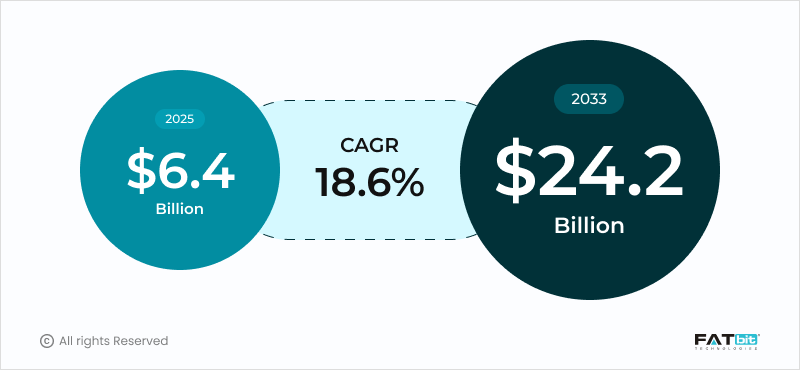
The global freelance platforms market size is projected to reach $24.2 billion by 2033, growing at a CAGR of 18.6% from 2026 to 2033.
North America holds the largest regional revenue share at over 30%, while Asia-Pacific represents the fastest-growing market.
78% of CEOs assert that their top freelancers contribute more value than degree-holding employees.
58% of knowledge workers who currently hold full-time jobs are considering freelancing to better access professional opportunities.
The global freelance workforce generates between $1.5 trillion and $3.5 trillion in total annual revenue.
What is a Freelance Service Marketplace and How Does It Work?
A freelance service marketplace is a two-sided online platform that connects independent professionals with businesses or individuals looking for specific services. Primarily, it includes freelancer profiles, job postings, proposals, contracts, payments, reviews, and dispute management. A freelance service marketplace creates a centralized environment where service providers can showcase their expertise and service seekers can discover, compare, hire, and transact with suitable professionals.
How Does a Freelance Service Marketplace Work?
The typical workflow of a freelance service marketplace involves the following stages:
User Registration and Profile Creation: Clients register on the platform and provide relevant business and hiring requirements while freelancers create profiles highlighting their skills, experience, portfolios, certifications, rates, and service categories.
Service Discovery: Clients can search for freelancers using categories, skills, rates, ratings, availability, and other filters.
Proposal Submission: Freelancers review relevant opportunities and submit proposals outlining their approach, pricing, experience, and delivery timeline. Once both parties agree on the scope, pricing, and timeline, they can communicate through the platform and establish project or contract terms.
Payment and Project Delivery: The client makes payment through the marketplace based on the agreed pricing structure. Depending on the platform, payments may be processed upfront or through milestones.
Reviews and Ratings: After project completion, clients and freelancers can provide ratings and feedback. These reviews help establish trust, improve profile visibility, and support better decision-making for future transactions.
Why Should Entrepreneurs Invest in Building an Online Freelance Marketplace?
With the global freelance industry projected to reach $24.2 billion by 2033, entrepreneurs are increasingly exploring this market to capitalize on its growing demand and business opportunities. However, beyond its promising market potential, several factors make investing in an online freelance marketplace an attractive opportunity, such as:
1. Shift Towards Remote Working
As more service providers prefer remote working, the demand for platforms that connect businesses with skilled professionals regardless of location is increasing. This creates a strong foundation for online freelance marketplaces that bring both sides together through a centralized digital platform.
2. Asset-Light Model
Unlike traditional businesses that require significant investment in physical infrastructure, a freelance marketplace operates on digital infrastructure. Hence, eliminating the need to own and manage physical inventory. This enables entrepreneurs to allocate resources efficiently and focus on user acquisition, platform development, and marketplace growth.
3. Scalable Revenue Opportunities
A freelance marketplace allows an entrepreneur to generate revenue through multiple channels such as commissions, subscription plans, feature listings, advertisements, and other additional services. As the number of users on the platform grows, these revenue streams scale alongside.
4. Faster Time to Market
By leveraging a turnkey solution, entrepreneurs can launch their freelance marketplace within a few days. Moreover, by launching an MVP, businesses can validate their business model, start acquiring users, build trust, and later refine the marketplace as per the market needs and feedback.
5. Niche Opportunities
The freelance market extends across numerous skills and industries. Entrepreneurs can focus on a specific profession, industry, geography, or service category and tailor the marketplace as per the requirements. A focused niche makes it easier to differentiate the marketplace and address specific gaps in the existing freelance ecosystem.
Top Online Freelance Marketplaces
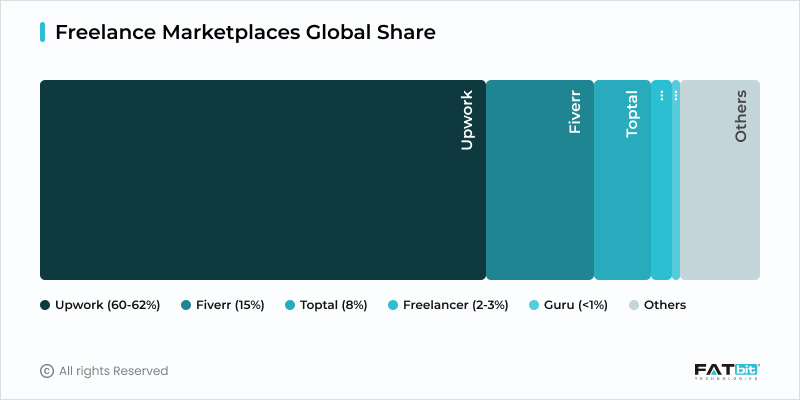
Several freelance marketplaces have established themselves as prominent platforms by connecting businesses with skilled professionals across diverse industries and regions. The following comparison highlights their global reach, freelancer base, revenue, and approximate market share to provide a quick view of the competitive landscape:
Platform
Global Reach
Active Freelancers
Revenue
Global Share (Approx)
Upwork
180+ countries
18 million+
$195.5 million (Q1 2026)
60-62%
Fiverr
160+ countries
380,000+
$97.8 million (Q2 2026)
14.85%
Toptal
135+ countries
20,000+
$200 million (est.)
8%
Freelancer
247+ countries, regions, and territories
89.4 million+
16.7 million (Q1 2026)
2-3%
Guru
85
3 million+
$6.10 million (Q2 2026)
<1%
Ready To Build Your Own Upwork Or Fiverr Alternative?
The freelance economy is evolving as businesses seek greater flexibility, specialized expertise, and access to talent beyond geographical boundaries. At the same time, more professionals are choosing freelancing as a long-term career path. These shifts are influencing how businesses hire independent talent and how freelancer platforms are designed, managed, and monetized.
Here are the key freelancing trends shaping this evolving landscape:
1. Rise of Specialized Freelancers
Businesses are increasingly looking for professionals with expertise in specific technologies, industries, and business functions rather than broad, general skills. This demand allows niche freelancers to differentiate their services, charge competitive rates, and build credibility within specific domains. Technology, marketing, consulting, cybersecurity, and other professional fields are seeing continued demand for specialized expertise.
2. Growth of Global Freelance Hiring
Technology has reduced many of the geographical barriers associated with hiring. Businesses can now work with skilled professionals across countries and regions through digital collaboration tools. This gives companies access to specialized talent, supports distributed teams, and allows them to hire professionals based on project requirements rather than location.
3. Freelancing as a Full-Time Career
Freelancing is increasingly being considered a long-term career option rather than only a source of additional income. Fiverr’s 2026 statistics report that 71% of surveyed freelancers work independently full time. Emerging professionals are also showing growing interest in independent careers and diversified income sources.
4. Growing Demand for Flexible Work
To gain flexibility, control costs, access specialized expertise, and scale teams quickly, companies are increasingly using freelance and contract talent instead of hiring an in-house team. At the same time, professionals are attracted by greater autonomy, flexible schedules, project variety, and control over their careers.
5. Rise of Long-Term Freelance Work
Freelance work is expanding beyond short-term and one-time projects. Businesses are increasingly engaging independent professionals for recurring assignments and longer-term requirements. These arrangements can provide freelancers with more consistent work while helping businesses maintain relationships with professionals who understand their requirements and workflows.
6. Evolution of Freelance Platforms
Freelance platforms are expanding beyond basic freelancer-client matching. Modern platforms increasingly support freelancer verification, project management, communication, payments, dispute resolution, compliance, and other aspects of the working relationship. This is enabling businesses and freelancers to manage more stages of the engagement through a single platform.
AI Trends in Freelancing
AI is moving beyond individual tasks and becoming part of the marketplace experience itself. From helping clients discover suitable talent to supporting freelancers with proposals and helping platforms manage risk, AI is reshaping how freelance marketplaces operate.
Here are the key AI trends influencing the next generation of freelance platforms:
1. AI-Assisted Proposal Creation
AI tools are being integrated into freelance platforms to help professionals draft proposals, improve their structure, and align applications with project requirements. However, personalized proposals that reflect the client’s specific needs remain important, as generic AI-generated responses may lack the context required for competitive applications.
2. AI-Based Pricing Recommendations
Some freelance marketplaces are using marketplace data to provide rate and pricing suggestions. These recommendations can help freelancers benchmark their services against prevailing rates, although niche expertise, experience, and project complexity still require individual assessment when determining the final price.
3. AI for Fraud Detection and Platform Security
AI is also being applied to freelancer verification, suspicious activity detection, fake profiles, scam projects, and payment-related risks. This can strengthen trust and security across freelance marketplaces while reducing the manual effort required to identify potentially fraudulent activity.
Choosing a Strategy: AI-Heavy, Human-First, or Hybrid
The right AI strategy depends on the type of freelance marketplace you plan to build, the complexity of the services offered, and how much automation your users need. Rather than adding AI across every part of the platform, choose an approach that supports your marketplace model:
AI-Heavy: Best suited for large-scale marketplaces where automated talent matching, pricing recommendations, proposal assistance, fraud detection, and workflow automation can improve efficiency and handle high user volumes.
Human-First: A better fit for premium, specialized, or complex services where trust, personal interaction, negotiation, and expert evaluation play a central role in hiring decisions.
Hybrid: Recommended for most new freelance marketplaces. It combines AI-driven automation for repetitive and data-heavy tasks with human involvement in areas such as negotiation, quality assessment, and client-freelancer communication.
For most businesses entering the freelance marketplace space, a hybrid model offers the strongest starting point. It allows you to introduce AI where it creates measurable value while retaining human oversight for decisions that require context, expertise, and judgment.
A Step-by-Step Roadmap to Build an Online Freelance Marketplace
Building a freelance marketplace involves more than connecting clients with skilled professionals. The platform must create a reliable flow from discovery and hiring to communication, payment, delivery, and feedback. The following roadmap breaks the process into practical stages, helping you validate the opportunity, choose a workable business model, build the right features, select a development route, and prepare for sustainable growth.
Step 1: Analyze the Industry and Validate Market Demand
Start by identifying your targeted audience instead of trying to serve every type of freelancer. Research competing platforms, their pricing, popular categories, customer complaints, and gaps in their service. Speak with both freelancers and buyers to understand their expectations. Test your concept through landing pages, surveys, interviews, or small promotional campaigns. A focused niche can make the initial supply-demand balance easier to manage and give your marketplace a clearer identity.
Step 2: Define the Business Architecture and Revenue Streams
Decide how users will interact before planning the technical structure. You may use a traditional model where freelancers offer defined services, or a project-based model where clients publish requirements and professionals submit proposals. Revenue can come from transaction commissions, subscriptions, listing charges, lead fees, or paid visibility. Combining a primary commission model with secondary income sources can provide greater flexibility as the marketplace matures.
Step 3: Essential Features of an Online Freelance Marketplace
The first release should concentrate on features that allow a complete transaction rather than trying to include every possible tool. Profiles, service or project listings, discovery, communication, payments, reviews, and administrative controls form the basic marketplace foundation. Trust-related functions such as verification, secure transactions, moderation, and dispute handling are equally important because both sides need confidence before committing to a project.
Let’s have a look at some essential features.
Features for Service Seekers
Account and profile management
Project posting or service browsing
Search, filters, and freelancer comparison
Messaging and file sharing
Secure payments and order tracking
Reviews, ratings, and dispute support
Features for Service Providers
Professional profile and portfolio
Service or gig creation
Proposal and application management
Messaging and project tracking
Milestones, earnings, and payout history
Ratings, reviews, and verification
Features for Admin
User and freelancer management
Listing and content moderation
Commission and payment controls
Dispute and refund management
Reports, analytics, and platform monitoring
Security and fraud-management tools
Step 4: Decide on the Development Approach
Choose the development path according to your marketplace’s complexity, budget, timeline, and plans. A self-hosted, SaaS, or custom development can help validate an idea quickly, while custom development provides greater control over unusual workflows, integrations, branding, and scaling requirements. For an early product, build an MVP around the core transaction journey and expand only after real users reveal which capabilities deserve further investment.
Analyze the following parameters to select the development approach:
Budget: Match the solution to available investment.
Time to market: SaaS and ready-made platforms generally launch faster.
Customization: Choose custom development for specialized workflows.
Scalability: Consider expected users, transactions, and integrations.
Technical resources: Assess your internal team’s development capabilities.
Security and compliance: Evaluate payment, identity, and data requirements.
Long-term ownership: Consider control over code, updates, and platform data.
Step 5: Launch and Scale the Marketplace
Launch for a specific audience rather than opening the platform everywhere at once. First recruit enough quality freelancers to make the marketplace useful, then attract clients through targeted communities, partnerships, content, referrals, and paid acquisition. Monitor completed projects, repeat usage, conversion, disputes, and transaction volume. Use this feedback to improve matching, onboarding, pricing, trust mechanisms, and performance before expanding into additional categories or regions.
Build, Launch, And Grow Your Freelance Marketplace With The Right Tools
Challenges in Building an Online Freelance Marketplace and Their Solutions
A freelance marketplace has to solve several problems before it can become a dependable space for clients and professionals. Understanding these hurdles early allows marketplace owners to build suitable safeguards and create a platform that works fairly for both sides.
1. Chicken and Egg Problem
One of the first hurdles is attracting freelancers and clients at the same time. Freelancers are reluctant to join a platform without enough projects, while clients may leave if they cannot find suitable professionals. This creates a cycle that can prevent early traction.
How to Overcome It:
Start with a focused niche and build a reliable group of freelancers before attracting clients. Use referrals, introductory offers, partnerships, and targeted marketing to create early activity. Once transactions begin, reviews and successful projects can help attract more users organically.
2. Ensuring Quality of Freelancers
Maintaining consistent freelancer quality becomes difficult as the marketplace grows. A large number of profiles does not necessarily mean a strong supply of capable professionals. Clients need reliable indicators of expertise, while genuine freelancers need a fair opportunity to distinguish themselves from unsuitable providers.
How to Overcome It:
Introduce identity checks, portfolio screening, skill verification, and ratings to establish trust. Clear profile requirements can help clients assess professionals more easily. Regular moderation should also remove misleading profiles, fake credentials, and consistently poor-quality service providers.
3. Platform Security
Freelance marketplaces handle sensitive information, private project files, conversations, payment details, and user identities. Any weakness in these areas can damage user confidence and create financial or reputational consequences. Security therefore needs to be considered throughout the platform rather than added as a final development layer.
How to Overcome It:
Protect accounts, personal information, project files, and payments with secure authentication, encryption, access controls, and fraud monitoring. Keep transactions within trusted payment systems and establish clear procedures for disputes, refunds, suspicious activity, and chargebacks.
4. Land Regulatory Compliance
A freelance marketplace can face different legal obligations depending on its operating countries, payment structure, user relationships, and services offered. Privacy, taxation, intellectual property, contracts, payments, dispute handling, and freelancer classification can all require attention. Ignoring these areas can create problems as the marketplace expands across jurisdictions.
How to Overcome It:
Set clear terms, privacy policies, freelancer agreements, payment rules, and dispute procedures before launch. Review requirements for every target market, particularly around taxation, data protection, intellectual property, and freelancer classification. Seek professional legal guidance where regulations are complex.
5. User Retention
Attracting users is only part of building a successful marketplace. Freelancers may leave when they struggle to find relevant projects, face unclear platform rules, or receive limited visibility. Clients may move elsewhere when search results are weak, communication is difficult, or service quality is inconsistent. Retention therefore depends on the experience users receive after registration.
How to Overcome It:
Make searching, matching, communication, payment, delivery, and reviews simple. Give freelancers relevant opportunities and dependable payouts while helping clients find suitable professionals quickly. Track repeat transactions, complaints, inactive users, and satisfaction levels to identify areas that need improvement.
Cost to Build an Online Freelance Marketplace
The cost of building an online freelance marketplace varies according to the development model, platform complexity, customization level, and features required. A SaaS or self-hosted solution can keep the initial investment relatively low, while custom development offers greater control over the marketplace experience. Along with development, businesses should account for integrations, security, hosting, maintenance, and post-launch improvements.
Development Approach
Estimated Cost
Typical Timeline
Suitable For
SaaS Marketplace
$1500-8,000+
2-6 weeks
Startups testing a marketplace concept
Self-hosted Marketplace Software
$5,000-15,000+
1-3 months
Businesses seeking faster deployment with more control
Custom Marketplace Development
$25,000-100,000+
3-6+ months
Businesses needing tailored features and workflows
Our Recommendation: A self-hosted white-label marketplace software can be a practical middle ground for businesses that want faster deployment without giving up as much control as a SaaS solution. It typically comes with core marketplace features already built, while allowing businesses to customize branding, workflows, payment options, user roles, and other functions. This can reduce development time and initial effort compared with building everything from scratch.
Yo!Gigs: A Robust White-Label Freelance Marketplace Software
Yo!Gigs is a white-label self-hosted marketplace solution designed to help businesses launch their own freelance or service marketplace without developing every component from the ground up. It supports different job formats, bidding, service packages, direct hiring, calendar booking, payments, user management, and multiple revenue options. The platform is also positioned for different marketplace niches and business models, giving entrepreneurs room to shape the product around their target audience.
How to Get Started with Yo!Gigs
Yo!Gigs follows a simple four-step process that takes businesses from selecting the right marketplace package to configuring the platform and managing it after launch. The process is designed to cover the key setup requirements while allowing businesses to customize the marketplace according to their business model and target audience.
Choose a Package: Select GoQuick for the default design or GoEnterprise for a customized marketplace setup.
Set Up and Install: Provide hosting details, after which Yo!Gigs installs the platform, selected features, and integrations.
Configure the Marketplace: Set up pages, regions, payment gateways, communication templates, terms, and initial services.
Manage Your Marketplace: Launch the platform, attract users through marketing tools, and monitor operations using task management, analytics, and reports.
Global Case Studies and Success Stories by Yo!Gigs
Yo!Gigs highlights marketplace projects across different countries and industries, showing how its software can be adapted to specific business models and niche audiences. Some of the featured examples include:
Impact Maker: A platform connecting climate-action experts with organizations looking for specialized expertise.
Bauherr.Digital: Connects real-estate builders with energy consultants, supporting specialized services within the property sector.
Micro Workspace: A freelance marketplace covering 700+ categories, offering services across a broad range of professional areas.
Fern: A niche marketplace example that demonstrates how the platform can be adapted for specialized service requirements.
These case studies reflect Yo!Gigs’ flexibility across freelance, professional, property, and niche service marketplaces, allowing businesses to structure the platform around their intended audience and marketplace model.
Explore Rich Functionalities Of Yo!Gigs With Our Experts
Building an online freelance marketplace requires more than choosing the right technology. Success depends on validating a clear niche, creating a balanced business model, solving trust and retention challenges, and delivering a smooth experience for both clients and freelancers. Entrepreneurs must also choose a development approach that matches their budget, timeline, customization needs, and growth plans.
For businesses seeking a faster route to market, ready-made white-label solutions such as Yo!Gigs can reduce development effort while providing the core infrastructure needed to launch and manage a marketplace. With the right strategy, focused execution, and continuous improvements based on user feedback, a freelance marketplace can evolve into a scalable and sustainable digital business.
FAQs
Should I build a freelance marketplace from scratch or use readymade software?
The choice of selecting the development path depends on your budget, timeline, customization requirements, and technical resources. Custom development provides greater control but requires more time and investment. Whereas readymade marketplace software provides pre-built functionality, faster deployment, and customization options, making it a practical option for businesses that want to enter the market faster.
How does an online freelance marketplace make money?
There are multiple ways by which an online freelance marketplace can generate revenue. The most common revenue streams include:
Transaction commission
Listing fees
Lead charges
Feature listings
Advertising
Premium services
Instead of sticking to only one revenue channel, most of the businesses combine several models based on their target market and transaction structure.
How do I attract freelancers to my new marketplace?
To attract freelancers to your new marketplace, start focusing on a specific niche and recruiting a reliable group of freelancers before aggressively acquiring clients. Partnerships, professional communities, referrals, introductory incentives, and targeted outreach can help build the initial supply of talent.
How can I differentiate my freelance marketplace from leading platforms like Upwork and Fiverr?
To differentiate your freelance marketplace from leading platforms, focus on a specific niche, audience, service type, or geographic market. Specialized services, better matching, stronger verification, tailored workflows, or unique pricing models can help create a distinct value proposition and competitive advantage. Beyond that, identifying existing gaps and building an experience around those needs can help attract and retain quality freelancers.
What KPIs should a freelance marketplace track?
Key performance indicators should measure both marketplace activity and business health. Track metrics such as freelancer and client acquisition, active users, project postings, proposals, completed transactions, conversion rates, repeat transactions, average transaction value, disputes, and user retention. Monitoring these metrics helps identify growth opportunities and operational problems.
All innovation starts with an idea to solve real-world problems. At FATbit Technologies we are passionate about driving digital transformation to prepare businesses for a digital-first tomorrow. Let’s discuss your BIG idea NOW.
Disclaimer: The Blog has been created with consideration and care. We strive to ensure that all information is as complete, correct, comprehensible, accurate and up-to-date as possible. Despite our continuing efforts, we cannot guarantee that the information made available is complete, correct, accurate or up-to-date. We advise - the readers should not take decisions completely based on the information and views shared by FATbit on its blog, readers should do their own research to further assure themselves before taking any commercial decision. The 3rd party trademarks, logos and screenshots of the websites and mobile applications are property of their respective owners, we are not directly associated with most of them.
Nandini Sood is a Content Writer at FATbit Technologies. Via her keen exploration of the emerging eCommerce market trends and developments, she creates insightful content for entrepreneurs, startups and business enthusiasts inclined to enter the eCommerce industry. Other than writing, she spends her free time reading and making crafts.